As of late 2025, the grace period for compliance has conclusively ended, making the European Union’s Network and Information Security 2 (NIS2) Directive an enforced reality for businesses across the continent and beyond. This landmark regulation, which officially replaced its 2016 predecessor in January 2023, has fundamentally reshaped the cybersecurity landscape by pulling more than 100,000 additional medium-sized companies into a new, far stricter compliance regime. The long-held assumption that such stringent oversight was reserved for massive, critical infrastructure enterprises has been shattered, establishing a higher baseline for digital security that is non-negotiable for participation in the European market. The era of lax cybersecurity oversight for a significant portion of the economy is definitively over. NIS2 has transformed the issue from a niche IT concern into a core business survival imperative, demanding a strategic, top-down approach to managing digital risk as a prerequisite for modern commerce.
The Global Reach of a European Mandate
A Radically Expanded Scope
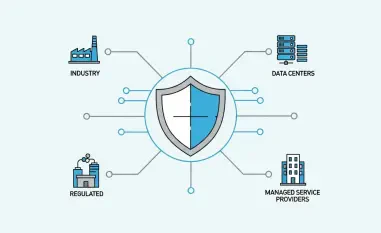
The most immediate and transformative aspect of the NIS2 Directive is its dramatically expanded scope, which represents a seismic shift from its predecessor. The original 2016 directive was narrowly focused on entities traditionally considered critical infrastructure, such as those in the energy, transport, banking, and healthcare sectors. NIS2, in contrast, casts a significantly wider net, reflecting a more mature understanding of the intricate, interconnected nature of the modern digital economy. The directive now covers a vast array of new sectors designated as “important,” including postal and courier services, waste management, the manufacturing of critical products like medical devices and chemicals, food production and processing, and a broad range of digital providers. This includes managed service providers (MSPs), cloud computing services, data centers, and online marketplaces, acknowledging their foundational role in supporting virtually all other business activities. This expansion means tens of thousands of medium-sized businesses, which may have previously operated without stringent cybersecurity oversight, are now legally obligated to implement and maintain a sophisticated security posture.
This broadening of regulatory authority is not merely an act of adding more industries to a list; it is a fundamental re-evaluation of what constitutes a critical component of society. The logic underpinning this expansion is the recognition that a cybersecurity incident in a seemingly secondary sector can have cascading and devastating effects across the entire economic and social fabric. A disruption at a key food processing plant, a data breach at a widely used managed service provider, or the compromise of a chemical manufacturing facility can create systemic risks that rival the failure of a power grid or a financial institution. For the vast number of medium-sized enterprises now falling under NIS2, this new reality presents a formidable challenge. Many of these firms lack the dedicated cybersecurity personnel, extensive budgets, and institutional experience of the large corporations covered by the original directive. They are now required to professionalize their approach to digital risk, moving from ad-hoc security measures to a formalized, documented, and resilient cybersecurity program or face severe penalties and potential exclusion from critical supply chains.
The International Ripple Effect
While NIS2 is a European Union directive, its influence is not confined by the EU’s geographical borders; its mandates are creating powerful ripple effects that extend across the globe, impacting companies in the United States and beyond. The most direct mechanism for this extraterritorial reach is through supply chain security requirements. The directive explicitly requires covered EU entities to manage the cybersecurity risks within their supply chains and supplier relationships. In practice, this means European firms are now legally and contractually obligated to ensure their partners and vendors meet security standards comparable to those mandated by NIS2. A US-based software-as-a-service (SaaS) provider, a component manufacturer in Asia, or a data analytics firm in another region that serves an EU client will find themselves compelled to demonstrate a high level of security maturity. Failure to do so could result in the termination of contracts, making compliance with NIS2 principles a commercial necessity for maintaining access to the lucrative European market.
Beyond these direct contractual pressures, NIS2 is a potent example of the “Brussels effect,” a phenomenon where EU regulations effectively become de facto global standards. As one of the world’s largest and most regulated economic blocs, the EU often sets high-water marks for issues like data privacy, environmental protection, and now, cybersecurity. For multinational corporations operating in multiple jurisdictions, it is often more efficient and less risky to standardize their global operations to the highest regulatory denominator rather than attempting to maintain disparate compliance frameworks for different regions. Consequently, many international companies are likely to adopt NIS2’s robust framework as their internal global standard. This preemptively aligns them with rising global expectations and simplifies cross-border operations. This trend, in turn, encourages other nations to model their own domestic cybersecurity legislation on the EU’s comprehensive approach, gradually elevating the baseline for corporate cyber governance worldwide and solidifying NIS2’s position as a global benchmark.
A New Era of Corporate Accountability
From IT Checklist to Boardroom Imperative
The NIS2 Directive signals a decisive end to the era where cybersecurity could be treated as a siloed, technical function delegated exclusively to the IT department. It forces a fundamental shift away from a reactive, checklist-driven approach toward a proactive, governance-led model of holistic organizational resilience. Under the old paradigm, cybersecurity was often viewed as an operational expense focused on deploying technological solutions like firewalls and antivirus software. NIS2 reframes it as an integral component of corporate governance and strategic risk management, on par with financial and legal compliance. The directive mandates that cybersecurity measures must be based on an all-hazards approach, meaning organizations must continuously assess their unique risk landscape and implement policies and controls that are appropriate to that specific context. This requires a deep, ongoing dialogue between technical experts and business leaders to ensure that security strategy is fully integrated with and supports the organization’s overarching objectives.
This elevation of cybersecurity to a critical governance issue necessitates significant structural and cultural changes within an organization. It demands the establishment of clear lines of authority for managing cyber risk, with formalized processes that are understood and approved at the highest levels of leadership. The role of the Chief Information Security Officer (CISO) or equivalent is elevated from a technical manager to a strategic advisor who must be able to communicate complex risks in business terms to the C-suite and the board. Furthermore, it requires embedding a culture of security throughout the entire organization, from employee training on cyber hygiene to incorporating security considerations into the product development lifecycle. The directive effectively mandates that cybersecurity can no longer be an afterthought; it must be a standing item on the executive agenda, supported by adequate resources and subject to regular review and oversight from the board of directors, ensuring it is woven into the very fabric of corporate strategy.
Leadership on the Line
Perhaps the most groundbreaking and impactful provision within the NIS2 Directive is its explicit focus on placing accountability for cybersecurity squarely on the shoulders of senior management. The legislation makes it unequivocally clear that the management bodies of covered entities are directly responsible for overseeing, approving, and ensuring the implementation of the organization’s cybersecurity risk management measures. This is a significant departure from previous regulations, where liability was often ambiguous or confined to the corporate entity as a whole. Under NIS2, individual executives and board members can be held personally liable for non-compliance, facing the prospect of substantial fines and, in some member states, temporary prohibitions from discharging managerial functions. This provision acts as a powerful motivator, transforming cybersecurity from a distant operational concern into a direct fiduciary and personal responsibility that cannot be ignored or delegated away.
While the prospect of personal liability is a formidable deterrent, it also presents an opportunity for forward-thinking leaders to leverage the directive as a catalyst for strategic advantage. Instead of viewing NIS2 solely as a burdensome regulatory hurdle, astute companies are using its mandates to justify crucial investments in security that yield broader business benefits. The process of achieving compliance inherently builds a more resilient and efficient organization by forcing a deeper understanding of critical digital assets, operational dependencies, and supply chain vulnerabilities. A company that can confidently demonstrate robust, board-level oversight of its cyber risk is not only compliant but also a more secure and trustworthy partner for customers and suppliers. This enhanced trust becomes a powerful competitive differentiator in a marketplace where data breaches and operational disruptions are increasingly common. In this light, the accountability mandated by NIS2 becomes a framework for building a more mature, resilient, and ultimately more valuable enterprise.
Mastering the Core Requirements
The Five Pillars of NIS2 Compliance
Achieving compliance with the NIS2 Directive is not an abstract endeavor; it is built upon a foundation of specific, interconnected, and mandatory security measures that form a holistic framework for cyber resilience. At its core is the requirement for a comprehensive risk management program. Organizations can no longer adopt a one-size-fits-all approach; they must conduct thorough assessments of their unique operational environment to identify specific threats and vulnerabilities. This risk analysis then informs the implementation of appropriate and proportionate technical and organizational controls, ranging from robust access control policies and multi-factor authentication to advanced encryption for data in transit and at rest. This proactive foundation is intrinsically linked to the imperative of securing the entire value chain. Firms are now responsible for the security posture of their direct suppliers, requiring them to conduct due diligence, include security clauses in contracts, and actively manage the risks posed by third-party vendors.
Building upon this preventative framework, NIS2 places significant emphasis on an organization’s ability to respond to and recover from incidents when they inevitably occur. The directive imposes strict incident reporting obligations, requiring entities to provide an early warning to their relevant national authority, typically within 24 hours of becoming aware of a significant incident, followed by a more detailed notification within 72 hours. This requirement necessitates having a well-defined and rehearsed incident response plan with clear roles and responsibilities. Complementing this is the mandate for robust business continuity and crisis management planning. Organizations must develop and regularly test strategies to ensure they can maintain or swiftly restore essential functions during and after a major cyber event. These five pillars—risk management, access control, supply chain security, incident reporting, and business continuity—are not isolated tasks to be checked off a list. Instead, they form an integrated system designed to build deep, sustainable resilience against an evolving threat landscape.
Your First Step A Call for Self Assessment
For the tens of thousands of organizations, particularly small and medium-sized enterprises (SMEs), that have been newly brought under the purview of NIS2, the extensive list of requirements can appear overwhelmingly complex and resource-intensive. Faced with limited budgets and a potential lack of dedicated in-house cybersecurity expertise, the path to compliance may seem daunting. However, the most critical and immediate action for any company is to begin with a thorough and honest self-evaluation. Before any new technologies are procured or policies are written, leadership must gain a clear and accurate understanding of the organization’s current state of readiness. This involves conducting a comprehensive gap analysis that maps existing security controls, policies, and procedures against the specific mandates of the directive. This foundational step is essential for identifying the most urgent vulnerabilities and prioritizing remediation efforts in a logical, cost-effective manner.
The journey toward NIS2 compliance was a transformative one that solidified a new global standard for corporate responsibility. The directive successfully moved the conversation about cybersecurity from server rooms to boardrooms, making it an undeniable pillar of modern governance and international commerce. The regulations required organizations to look beyond their own walls, acknowledging that true resilience depended on the security of their entire digital ecosystem, from the smallest supplier to the largest cloud provider. This shift in perspective, driven by the dual forces of stringent enforcement and the clear strategic benefits of a robust security posture, ultimately cultivated a more secure and resilient digital single market. The accountability it placed on leadership ensured that the protection of digital assets became as fundamental to business strategy as financial integrity, establishing a lasting legacy of heightened digital accountability.