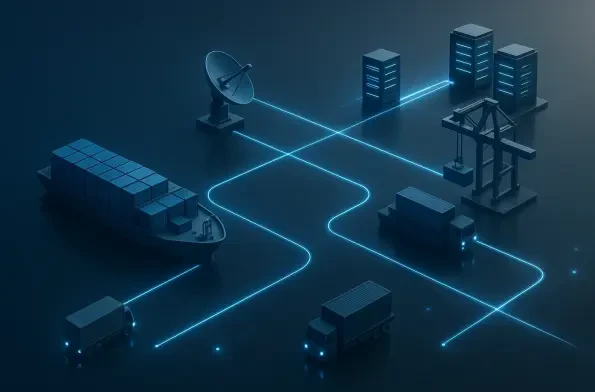
The maritime industry currently faces a ticking financial time bomb due to systemic underfunding of digital defenses compared to land-based enterprises of similar scale. As global trade becomes increasingly reliant on automated port logistics and satellite-linked navigation systems, the vulnerability of the world’s shipping fleet has reached a critical threshold. Historically, maritime security focused on physical threats like piracy or hazardous weather, yet the modern landscape is dominated by invisible adversaries capable of paralyzing entire supply chains from thousands of miles away. These digital risks are no longer abstract possibilities; they are active threats that demand immediate capital allocation to prevent catastrophic economic losses. The convergence of legacy hardware with connectivity has created a perfect storm for cybercriminals who view the high seas as the path of least resistance into the global economy. By failing to treat digital infrastructure as a core asset, ship owners are essentially operating multi-million dollar vessels without the modern equivalent of an alarm system. This neglect is a financial risk that threatens the stability of international commerce.
Analyzing the Vulnerability of Global Supply Chains
The Escalation: State-Sponsored Digital Espionage
In regions like the Strait of Hormuz, the threat landscape has shifted from simple signal jamming to sophisticated, state-sponsored intelligence gathering operations. Groups such as “Imperial Kitten” have demonstrated an alarming ability to infiltrate vessel networks, moving laterally through poorly secured systems to gain control over sensitive operational data. This is not merely about causing a temporary outage; it is a calculated effort to conduct long-term espionage by accessing onboard security cameras and live location feeds. Such breaches allow adversaries to monitor cargo movements and vessel behaviors in real-time, providing them with a tactical advantage that extends far beyond the digital realm. The industry has seen a rise in “quiet” intrusions where the primary goal is data exfiltration rather than immediate sabotage, making detection difficult for crews not trained in cyber forensics. This level of penetration highlights a systemic lack of security investment, showing that the barrier to entry for hackers remains low because of a persistent failure to prioritize robust digital safeguards across the global fleet.
The High Stakes: Quantifying the Real-World Cost of Operational Delays
The financial stakes involved in maritime operations are staggering, as the shipping industry remains the primary artery of global commerce in the modern age. Any digital disruption creates a cascading domino effect that impacts everything from automotive manufacturing to the distribution of essential consumer goods. When a vessel is delayed in port due to a ransomware attack or a compromised navigation system, the resulting costs can easily soar to $100,000 per day in direct operational losses. These figures do not even account for secondary effects, such as broken trucking schedules, missed warehouse quotas, and the inevitable surge in port congestion fees. A single week of downtime for a major container ship can disrupt the supply chains of hundreds of companies, leading to empty shelves and increased prices for the end consumer. The logistical complexity of modern trade means that there is very little margin for error, and even a minor software glitch can trigger a massive backlog that takes weeks or even months to resolve fully. This reality turns cybersecurity from a niche IT concern into a cornerstone of global economic stability and risk management.
Reforming the Maritime Financial Security Model
The Paradox: Dismantling the False Economy of Low-Cost Security
Despite these high-stakes risks, a glaring budget paradox exists within the shipping sector, where many owners allocate only a few hundred dollars a month to their total cybersecurity budget. This “false economy” leaves critical systems—containing sensitive crew data, cargo manifests, and navigational routes—wide open to exploitation by even mid-tier hacking collectives. Compared to the massive security budgets of land-based enterprises of a similar scale, the maritime industry’s current spending model is woefully inadequate for the value of the assets it aims to protect. A typical container ship can carry billions of dollars in cargo, yet its digital defenses are often less robust than those found in a small suburban accounting firm. This disconnect stems from a legacy mindset that views the ocean as a physical barrier that provides natural protection against external interference. In an era of global satellite coverage and remote diagnostic tools, the physical location of a ship no longer provides defense against a digital intrusion. The industry must move away from viewing cybersecurity as an optional overhead cost and instead recognize it as a foundational requirement for doing business.
The Solution: Implementing the 1% Digital Defense Strategy
Ultimately, the maritime sector recognized that major digital disruption was no longer a hypothetical scenario but an inevitable reality for any modern enterprise. Forward-thinking leaders took actionable steps by integrating cybersecurity training into standard crew certification programs, ensuring that human error was minimized through education. They also modernized their incident response plans, conducting regular drills that simulated cyberattacks to test coordination between shipboard personnel and management. These efforts were supported by the adoption of blockchain-based cargo tracking and encrypted communication channels, which provided a secure foundation for transactions. By treating security as a strategic investment rather than a cost, these firms protected their market position and insured the global supply chain against volatility. This approach ensured that the digital transformation of the industry did not come at the expense of its bottom line. The transition to a fortified digital environment proved that the only way to navigate the modern world was through a well-funded commitment to cybersecurity. This shift became the gold standard for maritime operations worldwide.