A new era of digital regulation has dawned, ushering in a wave of legislative changes from both the United Kingdom and the European Union that are fundamentally reshaping the rules for data, artificial intelligence, and cybersecurity. After years of deliberation, these sophisticated legal frameworks are now being implemented, creating a complex and increasingly divergent compliance landscape that extends far beyond a simple checklist update. For organizations with a global footprint, this moment represents a critical strategic inflection point, demanding immediate and proactive preparation to navigate two powerful yet distinct regulatory regimes that will define the digital economy for the foreseeable future. The choices made now will determine not just legal adherence but also competitive advantage in an environment where data governance is paramount.
The UK Forges Its Own Digital Path
A New Data Protection Landscape
The United Kingdom is decisively implementing its own digital legislative agenda, with the Data (Use and Access) Act 2025 (DUAA) at the forefront of this national shift. Enacted into law last year, the DUAA introduces a series of amendments to the UK’s existing data protection framework, including the UK General Data Protection Regulation (UK GDPR) and the Privacy and Electronic Communications Regulations (PECR). While these reforms are described as relatively measured, their impact is significant enough to necessitate a comprehensive review and update of existing data protection compliance programs. The core provisions that directly affect general business operations are taking effect in early 2026, marking a clear deadline for organizations to ensure their practices, policies, and internal documentation are fully aligned with the new domestic standards. This is not a minor adjustment but a foundational change requiring diligent attention.
The phased implementation of the DUAA means that different sectors have been adapting at different paces, with provisions related to law enforcement processing and digital verification services having been activated in late 2025. Now, the focus shifts squarely to the broader business community. The updates introduced by the Act require organizations to re-evaluate how they obtain consent, manage data subject rights, and document their processing activities. For instance, changes to the criteria for what constitutes a valid legal basis for processing data could impact everything from marketing strategies to product development. Businesses must therefore conduct thorough impact assessments to identify where their current processes diverge from the new requirements and implement the necessary changes to avoid non-compliance, which carries substantial financial and reputational risks under the UK’s robust enforcement regime.
Fortifying National Cyber Defenses
In direct response to the escalating frequency and sophistication of cyber threats targeting businesses and critical infrastructure, the UK is advancing the Cyber Security and Resilience Bill. This landmark legislation is poised to become law during 2026 and is designed to fundamentally overhaul and strengthen the country’s existing cybersecurity laws, currently governed by the Network and Information Systems Regulations 2018. A central aim of the bill is to expand the regulatory net to cover a wider range of crucial digital service providers. For the first time, managed IT service providers and data centers will be brought directly under the stringent legal framework, acknowledging their critical role in the digital supply chain. Furthermore, the bill grants regulators enhanced powers to designate certain organizations as “critical suppliers,” thereby subjecting them to the highest standards of security protocols and incident reporting obligations previously reserved for essential services.
The bill introduces a significantly more stringent enforcement and operational framework, raising the stakes for all regulated entities. One of the most impactful changes is a demanding two-stage incident reporting regime, which mandates an initial notification to regulatory authorities within just 24 hours of becoming aware of a reportable incident, followed by a comprehensive, detailed report within 72 hours. Complementing this is a new legal requirement for organizations to inform their customers if they have been affected by such an incident, increasing transparency and accountability. To ensure compliance, the bill proposes a much tougher enforcement model, with maximum financial penalties designed to align with the formidable levels set by the GDPR, potentially reaching up to 4% of global annual turnover. This combination of swift reporting, mandatory disclosure, and severe penalties underscores a major shift toward a more resilient national cyber posture.
The European Union’s Regulatory Overhaul
Simplifying and Modernizing with the “Digital Omnibus”
Simultaneously, the European Union is undertaking its own ambitious overhaul of its digital rulebook through the “Digital Omnibus” proposal, which was first announced in November 2025. This comprehensive package of reforms, spearheaded by the European Commission, is driven by a dual objective: to simplify the complex existing regulatory environment to reduce compliance burdens and costs for businesses, and to create a legal framework that actively stimulates innovation, particularly in the rapidly advancing field of artificial intelligence. The proposal’s scope is extensive, targeting several foundational legal instruments that form the bedrock of the EU’s digital single market. These include the EU GDPR, the e-Privacy Directive governing cookies and direct marketing, the NIS2 Directive on cybersecurity in critical sectors, and the EU Data Act, signaling a coordinated effort to create a more cohesive and future-proof regulatory ecosystem.
The philosophy underpinning the Digital Omnibus reflects the EU’s ongoing effort to balance robust protection for individual rights with the promotion of a dynamic and competitive digital economy. The reforms seek to address practical challenges and points of friction that have emerged since the implementation of current laws. A prominent example is the stated goal of reducing the “fatigue generated by the cookie banners” by simplifying transparency requirements for users. This specific aim illustrates a broader intent to make compliance more intuitive and less burdensome for both businesses and consumers, without sacrificing core principles of data protection. By streamlining rules and clarifying ambiguities across multiple pieces of legislation, the proposal aims to foster a more predictable and innovation-friendly environment, allowing companies to allocate resources more efficiently toward growth and technological development rather than navigating regulatory complexity.
Adjusting the Rules for AI and Data
Within the wide-ranging Digital Omnibus proposal are targeted amendments to the EU GDPR that directly address the realities of a data-driven economy powered by AI. Key proposals include a potential redefinition of “personal data” to introduce an element of subjectivity for businesses, which could provide more clarity on when data falls under the regulation’s strict rules. The package also suggests slightly relaxing breach notification requirements under certain conditions and clarifying the legal basis for using personal data to train AI models—a critical issue for the technology’s development. Furthermore, it aims to expand the circumstances under which organizations can refuse or charge for data subject access requests, addressing concerns about the misuse of this right. These adjustments signal a pragmatic approach to regulation, acknowledging the need for flexibility in the face of evolving technological practices.
In a separate but related development, the EU is also proposing a significant revision to the implementation timeline for its landmark AI Act. This globally influential regulation, which establishes a risk-based approach to AI governance, is now facing a notable delay. The rules for high-risk AI systems, which were originally set to apply from August 2026, are now proposed to be postponed by a period of 12 to 16 months, depending on the specific category of the system. This extension provides businesses with a crucial extended window to prepare for what is widely considered one of the world’s most comprehensive and stringent sets of AI regulations. The delay allows for more time to conduct thorough assessments of AI systems, implement necessary safeguards, and ensure that internal governance structures are robust enough to meet the Act’s demanding requirements before the new deadlines arrive.
Navigating the New International Framework
A Glimmer of Stability UK EU Data Flows
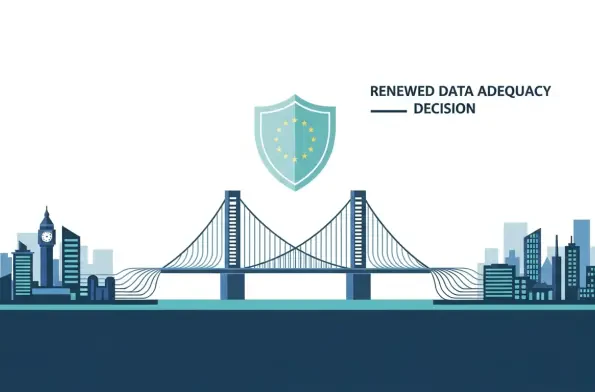
Amidst this period of significant legislative transformation, a critical pillar of stability has been secured for international data flows between the UK and the EU. In a much-anticipated decision in late 2025, the European Commission renewed its adequacy decision for the United Kingdom. This renewal formally confirms that the UK’s data protection standards are considered legally equivalent to those of the European Union, a determination that is of paramount importance for business continuity. The practical impact of this decision cannot be overstated, as it permits the continued free flow of personal data from the European Economic Area (EEA) to the UK without the need for additional, often complex and costly, legal safeguards such as Standard Contractual Clauses. This provides a stable and predictable legal foundation for countless businesses that rely on trans-channel data transfers for their daily operations.
This renewed adequacy decision provides a welcome period of certainty in an otherwise fluid regulatory environment, with the guarantee of seamless data transfers lasting until at least December 27, 2031. This long-term stability allows organizations to plan and invest with confidence, knowing that a fundamental mechanism supporting UK-EU trade and digital services is secure. The UK, in turn, reciprocally recognizes the EEA as adequate for its own outbound data transfers, creating a mutually beneficial data bridge. This area of alignment stands in stark contrast to the growing divergence seen in other areas of digital regulation, such as cybersecurity and AI governance. For businesses operating across both jurisdictions, this stable data transfer corridor represents a significant strategic asset, simplifying one major aspect of compliance while they focus on adapting to the more complex, diverging legal requirements in other domains.
The Strategic Choice for Global Businesses
The increasingly divergent paths being taken by the UK and the EU in digital regulation presented businesses with a fundamental strategic challenge. As new laws in cybersecurity and data use took hold, organizations operating in both markets were compelled to make a critical decision regarding their compliance architecture. The primary choice was between developing a localized, jurisdiction-specific compliance model or adopting a unified, global approach based on the highest common denominator—that is, adhering to the most stringent applicable standard across all operations. The localized strategy offered tailored precision, potentially reducing costs in less-regulated areas, but it also created complexity and the risk of internal fragmentation. In contrast, a unified model promised simplicity and a robust, defensible posture everywhere but could lead to over-compliance and higher operational costs in some regions.
Ultimately, the strategic decisions made during this pivotal year proved to be a key differentiator for long-term success. Companies that proactively assessed the impact of the UK’s DUAA and Cyber Security and Resilience Bill alongside the EU’s Digital Omnibus and revised AI Act timeline were best positioned to adapt. They treated compliance not as a static legal hurdle but as a dynamic component of their business strategy. Those that invested in agile governance frameworks capable of managing regulatory divergence were able to navigate the new landscape with greater efficiency and confidence. The planning and strategic choices made in 2026 did more than ensure legal adherence; they shaped the operational resilience and competitive positioning of businesses for the remainder of the decade in a digital world defined by sophisticated and powerful legal frameworks.