Malik Haidar is a seasoned cybersecurity expert who has spent years in the trenches of multinational corporations, defending complex infrastructures against sophisticated adversaries. With a background that spans deep technical analytics, threat intelligence, and strategic security management, Haidar is known for his ability to bridge the gap between technical defense and business resilience. He treats cybersecurity not just as a series of digital locks, but as a critical business function where speed, evidence, and operational efficiency dictate the bottom line.
In this discussion, we explore the systemic risks of traditional alert triage, the financial impact of rapid evidence gathering, and how modern SOC teams are evolving to handle growing threat volumes.
When security teams rely on reputation scores instead of observing actual execution, what specific business risks emerge? Please walk us through how seeing a full attack chain within the first minute changes the financial math of a case, using metrics to illustrate the difference.
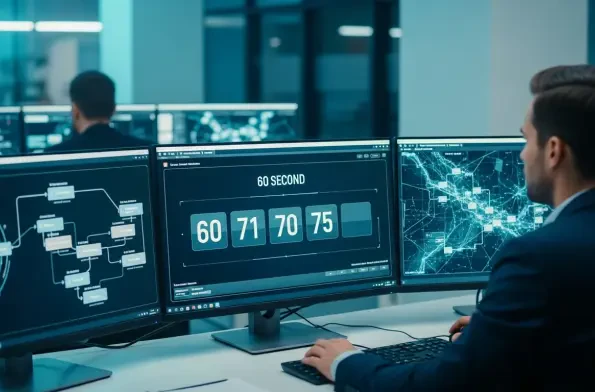
The most dangerous business risk is “invisible uncertainty,” where decisions are made on hashes or labels rather than proof of intent. When you rely on a reputation score, you are essentially gambling that a previously seen indicator hasn’t been repurposed or that a “clean” link isn’t a zero-day redirect. This leads to a high cost per case because analysts spend hours in “maybe” loops, while attackers enjoy extended dwell time to move laterally. By using a sandbox to see the full attack chain within the first 60 seconds, you fundamentally shift the financial math; for instance, teams often shave 21 minutes off their mean time to respond (MTTR) per case. Those 21 minutes represent the difference between a simple cleanup and a multi-million dollar breach remediation, as you move from “unclear” closures to evidence-backed containment before the adversary can establish persistence.
Junior analysts often escalate cases because they lack pattern recognition, whereas seniors close them quickly. How can a SOC effectively standardize triage to ensure consistent results across every shift? Please provide step-by-step details on making these evidence-backed verdicts repeatable for junior staff.
Standardization starts by removing the reliance on an analyst’s “gut feeling” and replacing it with shared, observable facts. First, the SOC must implement a unified execution environment where every analyst, regardless of tenure, follows the same process: detonating the threat in a sandbox to observe process activity and network calls. Second, use features like auto-generated reports and teamwork tools to ensure that the evidence used by a senior analyst at 2 PM is the same evidence available to a junior analyst at 2 AM. Third, leverage AI-assisted guidance within the analysis tool to point junior staff toward malicious behaviors they might otherwise miss. By making the triage process repeatable through a dedicated IOC tab and clear visual attack chains, you reduce the “escalate to be safe” mentality and ensure stable SLAs across every shift.
Shaving twenty minutes off the mean time to respond can be the difference between a contained incident and lateral movement. What specific operational bottlenecks usually prevent this speed? Please share an anecdote where bypassing manual validation loops significantly reduced a company’s real-world exposure.
The primary bottlenecks are manual validation loops—waiting for a sandbox to finish, manually checking redirects, or passing a ticket back and forth between tiers just to confirm a verdict. I recall a hybrid phishing scenario involving Tycoon 2FA and Salty 2FA where traditional controls were completely bypassed because the kits used evasive redirects that looked legitimate to standard scanners. In a manual workflow, this would have stayed in the queue for hours while an analyst tried to untangle the URL path. However, by using an interactive sandbox, the team revealed the full malicious flow and a fake Microsoft login page in just 35 seconds. Bypassing those manual checks allowed for immediate blocking of the C2 infrastructure, preventing the credential theft before a single employee could submit their 2FA token.
Empowering Tier 1 analysts to dismiss or confirm alerts independently can reduce Tier 2 escalations by thirty percent. What specific technical resources are required for this shift? Please describe the impact this reduction has on senior staff capacity and the handling of high-priority incidents.
To achieve a 30% reduction in escalations, Tier 1 needs more than just a dashboard; they need high-fidelity execution evidence and intuitive analysis tools. Specifically, they require an interactive cloud sandbox that provides a clear visual of the attack chain and an automated breakdown of Indicators of Compromise (IOCs). When Tier 1 has the technical resources to prove or dismiss an alert within a minute, they stop acting as a “mailroom” that just pushes tickets uphill. This preserves senior capacity, allowing Tier 2 and Tier 3 analysts to stop acting as verification desks for borderline cases and instead focus their expertise on high-priority, complex investigations. The result is a much faster queue and a significant drop in the overall volume of noise that reaches the most expensive resources in the SOC.
Manual tasks like navigating CAPTCHAs or extracting links from QR codes often lead to backlogs and human error. How does automating these interactions during the triage stage impact analyst throughput? Please provide examples of how this extra capacity allows teams to identify more threats.
Automating the “busy work” of triage—like following redirect chains or extracting links from QR codes in PDFs—removes the friction that leads to analyst burnout and oversight. When a sandbox automatically handles these interactions, it reduces the Tier 1 workload by roughly 20%, directly increasing the number of alerts each analyst can process per shift. For example, when a malicious PDF contains a hidden QR code, the system can extract and open the link automatically, revealing the next stage of the attack without the analyst needing to manually intervene. This extra capacity is transformative; we see teams identifying up to 58% more threats across their investigations because they finally have the time to look deeper into “suspicious” activities rather than just rushing through a backlog of manual tasks.
What is your forecast for the future of evidence-driven triage?
The future of triage lies in the total collapse of the time gap between detection and execution evidence. We are moving toward a model where the moment an alert is triggered, an automated interactive session has already detonated the threat, mapped the attack chain, and prepared an evidence-backed verdict for the human analyst to confirm. I believe we will see a 3x improvement in overall SOC efficiency as teams move away from reputation-based guesswork and toward “live” intelligence. For our readers, my advice is to stop measuring your SOC by how many alerts you close and start measuring it by the “certainty” of your verdicts—because speed without evidence is just a faster way to make a mistake.