A profound and historically significant capital reallocation is quietly reshaping the European economic landscape, marking the most important restructuring since the formation of the single market. This transformation signals a decisive pivot away from the consumer-facing industries that long defined market leadership, redirecting investment toward the foundational “hard infrastructure” of the modern digital world. The core drivers of this change are a trinity of powerful, interconnected forces: the insatiable demand for AI compute capacity, the subsequent rise of energy as a critical gatekeeper to growth, and the crucial reclassification of cybersecurity as an indispensable pillar of national security. These trends are not merely cyclical; they represent a structural re-evaluation of what constitutes a strategic asset, fundamentally altering corporate earnings, investment flows, and the very geography of economic power across the continent.
The Primacy of AI Infrastructure
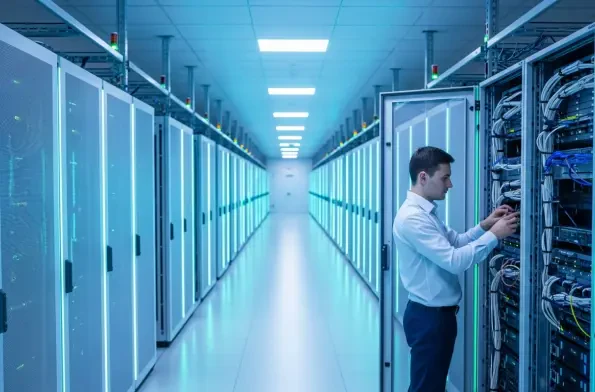
The most dominant investment theme in Europe is no longer software platforms or e-commerce but the physical infrastructure required to power artificial intelligence. The period between 2024 and 2025 witnessed the most rapid expansion in data-center investment in over a decade, a boom fueled by hyperscale cloud providers racing to secure the immense computational capacity needed for generative AI models. The clear winners in this new paradigm are not app developers but the industrial and engineering giants that build and supply these sprawling facilities. Siemens Energy, for instance, has seen a significant surge in its order book for power-management and grid-stabilization systems, which are critical for the uninterrupted operation of hyperscale data centers. Similarly, Schneider Electric, Europe’s leading supplier of data-center electrical systems, is reporting double-digit growth, directly correlating with the expansion of cloud providers’ European presence. This wave of capital expenditure represents a fundamental rotation into the companies that own and build the physical backbone of the AI economy.
The infrastructure boom extends far beyond the traditional industrial engineering sector, creating a broad ecosystem of interconnected players. European real-estate groups and major infrastructure funds are now key actors in this transformation. Companies such as SEGRO, Vantage, Digital Realty, and Equinix are aggressively expanding their European data-center campuses to meet overwhelming demand. In parallel, major infrastructure funds like Brookfield and Blackstone are channeling billions of euros into developing AI-ready sites, with a particular focus on Germany, France, and the Nordic countries, which offer favorable conditions for these energy-intensive operations. The overarching trend is a definitive migration of value and investment capital from intangible assets, like applications and online platforms, to the tangible, physical, and security-based assets that allow the digital world to function. This marks a structural re-evaluation of what constitutes a core, strategic asset in the 21st-century European economy.
The New Strategic Imperatives of Power and Security
A direct and critical consequence of the AI infrastructure boom is the elevation of energy—specifically electricity and grid access—to a position of paramount strategic importance. The primary constraint on AI growth is no longer market demand or technological capability but the sheer availability of power. This scarcity has transformed European utilities and grid operators into some of the most powerful and essential players in the entire digital ecosystem. In key European markets such as Germany and the Netherlands, the demand for power has now outstripped both supply and grid capacity, forcing data-center developers into multi-year waiting periods for new grid connections. This dynamic has empowered traditional energy companies like E.ON, RWE, and Iberdrola, who are now in a position to sign lucrative, long-term power-purchase agreements with data-center operators. These contracts lock in stable, predictable revenue streams that were not available just a few years ago, fundamentally altering their business models and market valuations.
Paralleling the strategic ascent of energy is the fundamental evolution of cybersecurity from a discretionary IT expense into a non-negotiable component of national and critical infrastructure security. This shift has led to cybersecurity being treated as “defense spending in disguise.” By now, cybersecurity budgets are no longer isolated within corporate IT departments but are deeply embedded within national defense budgets, critical infrastructure protection plans, and the core operating budgets of essential services like utilities and transportation. This integration makes cybersecurity revenue far more predictable, resilient, and less susceptible to economic downturns. This benefits European firms like Darktrace and Thales, as well as U.S. giants such as Palo Alto Networks and CrowdStrike, who are expanding aggressively across Europe. Similar to the renewable energy sector, the market has re-rated cybersecurity, pricing it more like regulated infrastructure to reflect its newfound status as an essential service.
Forging a New Economic Map for Europe
The convergence of these powerful forces—AI infrastructure, energy scarcity, and nationalized cybersecurity—decisively reshaped European markets. The period dominated by consumer-centric sectors like luxury goods and travel came to a definitive end, replaced by an era where strategic infrastructure became the undisputed leader of economic growth and investment. This capital reallocation also forged a new geographic distribution of economic strengths, fostering a “multi-hub digital-industrial Europe.” Germany and the Nordic countries solidified their roles as centers for engineering and power systems, while Ireland, France, and the Netherlands became leaders in cloud computing and data centers. Meanwhile, Spain and Portugal emerged as crucial energy-linked digital hubs, leveraging their abundant renewable resources. This transformation proved that the winning investments of the cycle were not consumer-facing brands. Instead, global capital flowed to the companies that formed the new backbone of Europe’s growth engine: grid owners, data-center operators, and cybersecurity platforms. The central question for investors shifted from whether Europe could produce the next consumer app to who controlled Europe’s power, compute, and security.