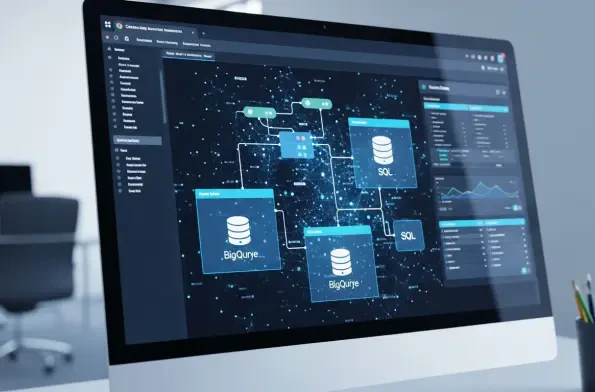
Security researchers recently identified a collection of nine cross-tenant vulnerabilities within Google Looker Studio, a discovery that highlights the overlooked risks inherent in business intelligence platforms. These flaws, collectively branded as LeakyLooker, presented a significant threat to the integrity of cloud-based data by potentially allowing unauthorized actors to extract, manipulate, or delete sensitive information across various cloud tenants. Because Looker Studio integrates deeply with the broader Google Cloud ecosystem, including services such as BigQuery, Google Sheets, and various SQL databases, these vulnerabilities provided a broad attack surface that could compromise the safety of diverse corporate environments. The discovery underscores how a modern data visualization tool, designed for seamless collaboration, can inadvertently become a vector for sophisticated exploitation if the underlying authentication mechanisms are not strictly isolated between users. This scenario represents a modern challenge for cloud security teams who must now account for the complex web of permissions that exist between analytics dashboards and the core databases they visualize every day.
Technical Analysis of the Attack Vectors
Mechanical Flaws: Authentication and SQL Connectors
The investigation into these vulnerabilities revealed two primary attack vectors rooted in how the platform manages authentication and data connectors, illustrating a failure in traditional security boundaries. The first vector was identified as a zero-click attack path where malicious server-side requests could trigger SQL queries using the report owner’s credentials without any direct user interaction or approval. This meant that an attacker could execute code or retrieve data simply by targeting a specific report configuration. The second vector involved a one-click attack path, where a victim might unknowingly execute malicious SQL queries by simply opening a compromised report or clicking a seemingly harmless link within the application. These paths were facilitated by several underlying technical issues, such as SQL injection flaws in database connectors and data leakage through rendered report elements like hyperlinks or images, which exposed sensitive metadata to external parties. These weaknesses demonstrated that the bridge between user interfaces and backend database engines remained a fertile ground for exploitation when input validation was handled inconsistently.
Credential Leakage: The Report Duplication Process
One of the most concerning aspects of the LeakyLooker discovery involved the platform’s native report-duplication feature, which failed to sanitize sensitive connection strings properly. Researchers found that when a viewer copied a report to their own workspace, the original database credentials often remained embedded within the new version of the file without the original owner’s knowledge. This oversight enabled the new owner to run custom SQL queries against the original database, bypassing standard security prompts because the system treated the copied credentials as valid for the new environment. The scope of this flaw extended to major services including Spanner, PostgreSQL, MySQL, and Cloud Storage, meaning that an unsuspecting user sharing a template could inadvertently grant full database access to any third party who duplicated the report. This persistence of credentials across tenant boundaries created a persistent risk of data exfiltration that traditional identity management tools often struggle to detect or mitigate in a standard business environment. By allowing credentials to migrate between accounts, the platform essentially broke the principle of least privilege.
Economic and Structural Implications of Cross-Tenant Flaws
Financial Impact: Denial of Wallet and Resource Exhaustion
Beyond the theft of raw data, the researchers identified a denial-of-wallet vulnerability that could allow attackers to exhaust a victim’s financial resources by manipulating back-end cloud processes. By forcing the Looker Studio environment to execute complex and resource-intensive queries against a victim’s BigQuery instance, an attacker could generate massive processing fees that the organization would be obligated to pay. This type of attack is particularly insidious because it does not require the removal of data to cause harm; instead, it weaponizes the cloud’s elastic billing model against the user. Because BigQuery charges are often based on the volume of data processed, a sustained campaign of malicious queries could result in unexpected financial costs that disrupt operational budgets and force temporary service shutdowns. This discovery highlighted the need for cloud security strategies to move beyond simple data protection and start considering the financial risks associated with unauthorized resource consumption. Such attacks proved that availability and cost control are just as critical as confidentiality in the modern cloud landscape.
Strategic Remediation: Future Security Posture
In response to these findings, Google collaborated closely with security experts to implement global patches across the Looker Studio platform, ensuring that the vulnerabilities were addressed at the source. The incident demonstrated that even trusted data visualization tools could become unintentional gateways for sophisticated exploitation if not strictly monitored. Organizations were urged to adopt a proactive security posture by reviewing report-sharing permissions and disabling unused connectors to mitigate future risks. It became clear that treating business intelligence integrations as high-priority components was necessary for a robust cloud security strategy. The findings highlighted how the industry moved toward more rigorous isolation of tenant credentials to prevent similar occurrences in the future. Managers were advised to implement strict auditing of all database connectors and to treat any dashboard with external sharing capabilities as a potential security perimeter. This transition required a shift in how data teams perceived the safety of their collaborative tools, moving from a position of inherent trust to one of verified and continuous security assessment.