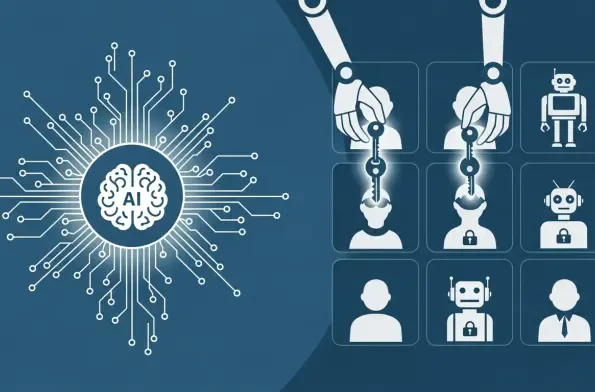
AI-Driven Identity Security is no longer a futuristic concept but a present-day necessity, representing a pivotal advancement in how enterprises protect their most critical assets. This review explores the evolution of this technology, dissects its core features and performance capabilities, and analyzes the profound impact it has on modern Identity and Access Management (IAM). The purpose of this analysis is to provide a thorough understanding of where the technology stands, its real-world value, and its trajectory for future development.
The Evolution from Manual Oversight to Intelligent Governance
Artificial Intelligence has fundamentally transformed Identity and Access Management from a reactive, rules-based discipline into a proactive, predictive, and highly automated security function. This transition was not optional but a direct response to the escalating complexity of modern digital environments. Factors such as distributed hybrid workforces, sprawling multi-cloud infrastructures, and the explosive growth of non-human identities have rendered traditional manual oversight obsolete and ineffective.
The core value of AI in this context lies in its ability to process and analyze immense datasets in real-time, a task far beyond human capacity. This capability makes it an indispensable component of any mature security strategy. Consequently, the conversation within the industry has shifted decisively from questioning if AI is valuable in identity security to determining how it can be best leveraged to build a resilient and adaptive defense framework.
Core Capabilities of Modern AI Driven IAM
Predictive Analytics and Behavioral Profiling
AI effectively serves as the central analytical engine of a modern IAM program, operating continuously to assess user activity and establish dynamic behavioral baselines for every identity. By understanding what constitutes “normal” activity for each user, application, and system, it can instantly recognize patterns that deviate from the established norm. This process moves security from a state of passive monitoring to active, intelligent observation.
This sophisticated profiling capability functions as a crucial early warning system against a wide range of threats. Subtle anomalies, such as a user accessing unusual files, logging in from a new location, or an API key exhibiting strange traffic patterns, are flagged in real-time. This allows security teams to investigate and intervene long before a potential compromise or insider threat escalates into a full-blown security incident, effectively shortening the threat lifecycle.
Dynamic Risk Informed Authentication
The era of relying on static credentials and fixed access policies is rapidly ending, thanks to the introduction of AI-driven adaptive authentication frameworks. This modern approach synthesizes a wide array of contextual factors—including historical user behavior, geolocation, device health, network reputation, and real-time threat intelligence—to calculate a dynamic risk score for every access request.
Based on this real-time risk assessment, the system can dynamically adjust security requirements. For instance, a low-risk login attempt from a recognized device and location might proceed seamlessly without interrupting the user. However, a high-risk attempt exhibiting anomalous signals can automatically trigger a step-up challenge, such as requiring multi-factor authentication or limiting access to non-sensitive resources. This creates a security posture that is both stronger and more user-friendly.
Automated Identity Lifecycle Management
AI introduces an unparalleled level of precision and efficiency to the entire identity lifecycle, from the moment an employee is onboarded to the day they are offboarded. It automates the complex processes of assigning and continuously adjusting access rights based on dynamic criteria like roles, projects, team changes, and responsibilities, which ensures that permissions are always current and appropriate.
This automation is critical for consistently enforcing the principle of least privilege across the organization, a foundational tenet of Zero Trust security. By removing human error and delay from access governance, AI prevents the gradual accumulation of unnecessary permissions, known as privilege creep. This not only strengthens security by minimizing the potential attack surface but also streamlines operations and simplifies compliance audits.
Generative AI for Policy and Workflow Automation
Beyond just analyzing data, generative AI contributes to identity security by actively creating intelligent solutions. This emerging capability can draft security policies in natural language, helping organizations articulate and standardize their governance rules more effectively. It can also automate the creation of complex governance workflows for access reviews and certification campaigns, translating high-level business requirements into executable processes.
Furthermore, generative AI excels at synthesizing disparate datasets from various security tools and platforms into cohesive, actionable insights. It can generate summaries, identify thematic risks, and recommend remediation steps, thereby significantly reducing the analytical burden on security teams. This allows human experts to focus on strategic decision-making rather than getting bogged down in manual data correlation and report generation.
Emerging Trends The Rise of the Identity Fabric
The latest and most significant development shaping the field is the adoption of the “Identity Fabric” as an essential architectural framework. This unified approach is designed to connect disparate identity data sources, policies, and controls from across the enterprise into a single, cohesive layer. Its purpose is to eliminate the security gaps, visibility issues, and operational friction that inevitably arise from siloed IAM implementations.
The Identity Fabric acts as a foundational enabler that dramatically amplifies the value of AI. By providing a single, coherent source of truth, it ensures that AI models are fed complete and contextualized data. Within this framework, predictive insights (threat detection) and generative capabilities (solution creation) reinforce one another, leading to a stronger, more holistic security posture where intelligence is applied consistently across the entire digital ecosystem.
Real World Applications and Strategic Use Cases
Securing the Modern Hybrid Workforce
In an era where remote and hybrid work models are standard, AI-driven identity security has become critical for protecting access from an ever-expanding array of locations and personal devices. The traditional corporate perimeter has dissolved, creating new challenges for verifying user identity and trustworthiness beyond the confines of the office network.
By continuously analyzing behavioral patterns and contextual signals, AI can accurately distinguish between a legitimate employee working from a coffee shop and a potential threat actor attempting to use compromised credentials. It enables organizations to grant secure access and maintain productivity without forcing a trade-off with security, ensuring that protective measures are proportional to the real-time risk of each interaction.
Managing Non Human and Multi Cloud Identities
The proliferation of non-human identities—such as service accounts, API keys, and machine workloads in cloud environments—has created a massive and often poorly managed attack surface. These identities now far outnumber human users, and their credentials are a prime target for attackers seeking to move laterally and access sensitive data.
AI is uniquely capable of monitoring and governing these machine identities at the scale and speed required. Manual oversight is simply impossible in complex, dynamic multi-cloud environments. AI can detect anomalous activity, such as an API key being used outside its intended scope, and enforce strict, automated access controls to prevent misuse, ensuring that both human and non-human identities are secured.
Overcoming Challenges and Implementation Hurdles
The Problem of Disconnected Data and Siloed Tools
The primary challenge to implementing AI effectively in identity security is a fragmented IT environment. When AI solutions are deployed on top of siloed identity tools and disconnected data repositories, they produce fragmented insights. This can lead to conflicting guidance, incomplete risk visibility, and a security strategy that is fundamentally disjointed.
To overcome this, organizations must move strategically toward an integrated architecture. An Identity Fabric provides the necessary unification, creating a single source of truth that allows AI models to see the full picture. Without this cohesive data foundation, the potential of AI remains severely limited, and investments may fail to deliver their expected returns.
Ensuring AI Accuracy and Responsible Governance
The successful deployment of AI in any security function ultimately hinges on trust. Organizations must proactively address potential issues like algorithmic bias, which could lead to unfair or inaccurate decisions. It is also crucial to manage the rate of false positives to avoid the “alert fatigue” that can overwhelm security teams and cause real threats to be missed.
Establishing a robust framework for responsible AI is therefore critical. This involves ensuring that AI processes are transparent and explainable, allowing human operators to understand and validate automated decisions. Maintaining this balance of automation and oversight is essential for ensuring the accuracy, fairness, and ethical alignment of an AI-driven security program.
The Future Outlook Towards Continuous Assurance
The future of identity security lies in achieving a state of “continuous assurance,” an ideal state where every identity—whether human or machine—is granted precisely the right level of access, for the right reasons, at all times. This concept forms the operational core of a true Zero Trust architecture, where trust is never assumed and must be continuously verified.
The synergy between predictive AI for threat detection and generative AI for solution creation will become increasingly profound. This will enable security systems that not only detect deviations and potential risks but also auto-remediate them and dynamically optimize access policies in real-time. Security will evolve from a system of static gates to a living, adaptive ecosystem that continuously adjusts to the changing threat landscape.
Final Assessment and Key Takeaways
This review found that AI has firmly established its value in identity security, transitioning from a competitive advantage to a foundational necessity for modern enterprises. The investigation revealed that the effectiveness of AI was directly proportional to the quality and integration of the data it consumed, making the underlying architecture a critical factor for success.
The key takeaway was that enterprises that successfully embedded AI within a unified Identity Fabric were best positioned to navigate evolving threats, reduce operational complexity, and achieve a robust and intelligent security posture. This integrated approach proved to be the most viable path toward a resilient security ecosystem where risk was proactively minimized and trust was continuously verified, not implicitly granted.