
The global law enforcement community recently celebrated a massive victory against digital threats, yet the rapid emergence of Stadia RAT suggests that infrastructure takedowns are rarely a final solution for sophisticated malware developers. In June 2026, a coordinated international effort known

Introduction: A Shift in the Digital Frontline While security professionals typically scan for threats originating from known hostile regions, the Iranian cyber-espionage actor known as the Prince of Persia has fundamentally rewritten the playbook by moving its base of operations into the American

A major crackdown on cyber-enabled crime recently identified sixty-five thousand victims who were targeted by sophisticated digital investment schemes. As the African continent experiences an unprecedented surge in digital connectivity, the rapid expansion of mobile banking and online platforms has

Ugandan police discovered that many foreign nationals were restricted from leaving scam compounds while being forced to target Asian pensioners with fraudulent trades. This discovery was a pivotal moment in Operation Serengeti III, a sophisticated multi-country initiative led by Interpol to
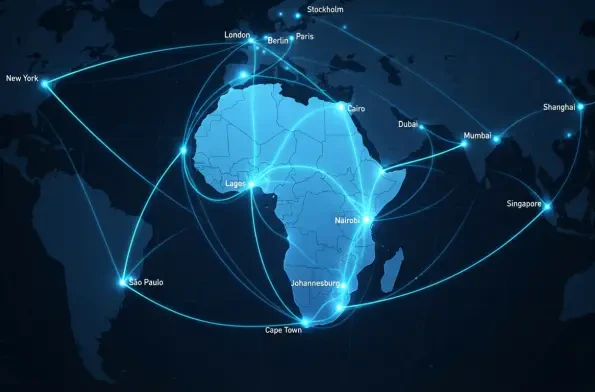
The rapid progression of autonomous agents has fundamentally redefined the digital landscape, pushing regulatory frameworks to adapt to systems that think and act independently. As artificial intelligence transitions from passive tools to agentic entities, the United Kingdom’s Information C

The modular design of the latest DarkSword iteration includes high-level programming that significantly reduces its digital footprint to evade modern security detection. This aggressive variant represents a significant departure from previous, more rudimentary hacking attempts that relied on volume

Saudi digital security experts recommend verifying any urgent request for money received via audio recording through a completely separate and trusted communication channel. This core advice serves as the primary defense in the Kingdom’s newly launched Tarah AI campaign, a national initiative d

1 2 3 4 5 6 7 8 9 10 11 12 13 14 15 16 17 18 19 20 21 22 23 24 25 26 27 28 29 30 31 32 33 34 35 36 37 38 39 40 41 42 43 44
