The traditional reliance on annual manual penetration tests has officially crumbled under the weight of modern development speeds, giving way to autonomous security agents that probe defenses with relentless precision. As organizations navigate an increasingly complex digital landscape, the shift

The relentless acceleration of machine learning has pushed the corporate world into a territory where traditional security perimeters no longer exist in a physical or even a purely digital sense. As organizations move through this year, the role of the Chief Information Security Officer is

The digital echoes of a human life now persist long after the physical body has failed, yet the infrastructure meant to protect this legacy remains dangerously fragile and fragmented. When a person passes away, their accounts often become ghost ships, floating in a regulatory void that leaves

Modern battlefields are no longer defined solely by the thunder of artillery, as silent digital intrusions into civilian infrastructure now provide the tactical eyes for state-sponsored kinetic strikes. This shift represents a fundamental transformation in Middle Eastern statecraft, where the
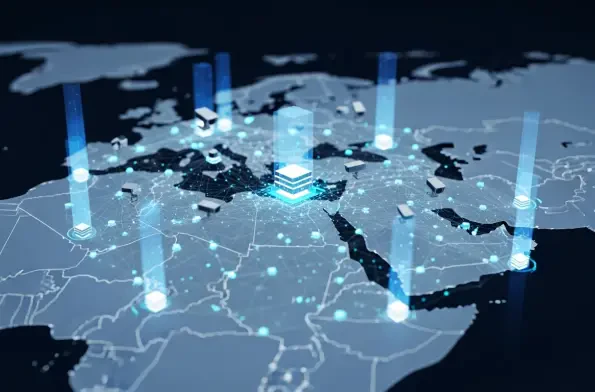
The digital perimeter of the United Kingdom is currently facing a period of heightened scrutiny as geopolitical tremors in the Middle East begin to resonate through the global fiber-optic infrastructure. As of early 2026, the National Cyber Security Centre (NCSC) has taken the proactive step of

The traditional concept of a secure digital perimeter has dissolved as modern adversaries abandon technical brute force in favor of exploiting the very identities that grant access to corporate systems. Security teams now face a landscape where the primary threat vector is no longer a flawed line

Malik Haidar is a distinguished cybersecurity authority who has spent years at the intersection of threat intelligence and corporate risk management. With a career dedicated to defending multinational infrastructure from sophisticated actors, he specializes in translating complex technical