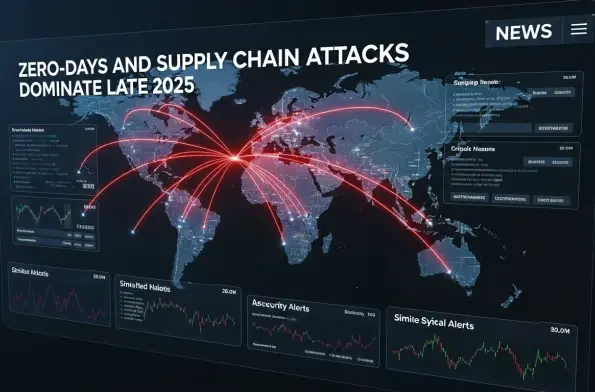
The final weeks of 2025 have crystallized into a period of unprecedented cyber hostility, where the convergence of aggressive exploitation campaigns and significant community advancements has created a highly volatile threat landscape. A relentless barrage of actively exploited zero-day vulnerabilities affecting the world’s most critical software ecosystems became the defining characteristic of this period, forcing security teams into a constant state of high alert. More strategically, threat intelligence revealed an alarming pivot by sophisticated adversaries, who are now systematically targeting the foundational layers of modern technology: the software supply chain and the developers who build upon it. This “shift-left” in attack methodology was complemented by a marked evolution in the tools of the trade, with malware, ransomware, and social engineering tactics reaching new heights of sophistication and stealth. In response, the global security community accelerated its own efforts, releasing critical resources and new tools in a clear demonstration of the escalating arms race. The overarching message for organizations is unequivocal: the time for reactive security is over. A posture of heightened organizational agility, proactive defense, and deep, pervasive visibility across every layer of the technology stack is no longer a best practice but an essential prerequisite for survival.
The Pervasive Threat of Zero-Day Exploitation
A dominant theme throughout the closing weeks of the year was the discovery and immediate, widespread exploitation of several high-impact zero-day vulnerabilities across cornerstone enterprise and consumer technologies, demanding urgent patching and mitigation from defenders. Microsoft’s final security update of the year, December’s Patch Tuesday, addressed a total of 56 flaws, but the true urgency lay with the three vulnerabilities confirmed to be under active attack in the wild. Two of these were severe remote code execution (RCE) vulnerabilities stemming from command injection flaws, one in PowerShell and another in the GitHub Copilot extension for JetBrains IDEs, highlighting the increasing risk to developer environments. The third actively exploited zero-day was a significant elevation-of-privilege (EoP) vulnerability within the Windows Cloud Files Mini Filter Driver, a flaw that could grant attackers systemic control following an initial breach. The scale of the update, which included 19 RCEs and 28 EoP flaws in total, forced defenders to prioritize these actively exploited vulnerabilities, especially on internet-facing systems and high-value developer endpoints.
The pressure on security teams was compounded by a parallel crisis in the browser ecosystem, as multiple zero-day threats targeted Chromium-based platforms. The U.S. Cybersecurity and Infrastructure Security Agency (CISA) added CVE‑2025‑14174 to its Known Exploited Vulnerabilities (KEV) catalog, signaling a critical threat to federal networks. This vulnerability, an out-of-bounds memory access flaw in ANGLE, Chromium’s graphics engine layer, allows for remote code execution through specially crafted web content, placing all users of browsers like Google Chrome and Microsoft Edge at risk. Federal agencies were mandated to apply patches before an early January deadline, a directive that underscored the severity of the threat. The situation was exacerbated by the simultaneous discovery of a separate and distinct Chrome zero-day also under active exploitation. This campaign targeted mainstream users with the goal of deploying spyware and ransomware, reinforcing the absolute necessity for enterprise-wide enforcement of browser auto-update policies and enhanced monitoring for any anomalous browser behavior that could indicate a compromise in progress.
A Strategic Shift Toward Supply Chain Compromise
There is now clear and compelling evidence of a calculated pivot by attackers toward compromising the software supply chain by targeting developers and their essential tools directly. One long-running campaign uncovered this period involved typo-squatted Go packages designed to impersonate legitimate Google and pborman UUID libraries. These malicious packages contained a backdoored function that silently exfiltrated sensitive data, demonstrating a patient and insidious approach to infiltration. This trend was further validated by security researchers who demonstrated the alarming ease with which malicious extensions could be published to popular IDE marketplaces like that of Visual Studio Code. An example “Piithon-linter” extension successfully bypassed all marketplace checks and, once installed by an unsuspecting developer, could execute arbitrary code, steal environment variables, and deploy a Merlin C2 agent, all while evading endpoint detection and response (EDR) solutions. The active exploitation of a Notepad++ vulnerability to deliver malicious payloads further cements the fact that developer utilities have become high-value, front-line targets for sophisticated adversaries seeking to inject threats at the very source of software creation.
This strategic focus on the supply chain has resulted in the development of increasingly sophisticated and evasive malware. The discovery of GhostPenguin, a previously unknown Linux backdoor, highlights the growing threat to non-Windows environments. For months, this highly advanced implant evaded every single detection engine on VirusTotal while providing its operators with a full remote shell and file system access over encrypted UDP traffic. Its use of RC5 encryption and a robust command set exemplifies the challenge of detecting bespoke, low-and-slow implants on critical server infrastructure. Meanwhile, in the Windows ecosystem, the public leak of the ValleyRAT builder has led to a surge in campaigns deploying this modular backdoor. The latest versions now include a kernel-mode rootkit capable of loading on fully patched Windows 11 systems. This rootkit’s most dangerous feature is its ability to forcibly remove AV/EDR drivers, creating a significant and terrifying defensive blind spot on any machine it successfully compromises, rendering traditional endpoint security measures ineffective.
Widespread Vulnerabilities in Core Enterprise Infrastructure
Ransomware campaigns evolved with surgical precision, with threat actors demonstrating a strategic focus on targeting the virtualization layer of enterprise networks to maximize their impact and leverage. A sharp increase in attacks specifically targeting Microsoft Hyper-V and VMware ESXi hypervisors was reported, as these platforms allow attackers to encrypt entire fleets of virtual machines in a single, devastating operation. These attacks often succeed by exploiting weak administrative credentials, common misconfigurations, and inadequate network segmentation around the critical hypervisor management infrastructure. This trend was amplified by the emergence of VolkLocker, a cross-platform Ransomware-as-a-Service (RaaS) developed by the pro-Russia group CyberVolk. Written in Go, it targets both Windows and Linux systems and employs advanced techniques like a UAC bypass on Windows and extensive sandbox evasion to ensure it only detonates on production systems. Simultaneously, network security appliances, the gatekeepers of enterprise perimeters, were found to be critically vulnerable. Both WatchGuard and Fortinet disclosed severe flaws, including a critical improper cryptographic signature verification issue in Fortinet’s FortiCloud Single Sign-On (SSO) implementation that could allow an unauthenticated attacker to forge SAML messages and gain full administrative access.
The security of cloud control planes and identity systems remained a paramount concern, as novel attack techniques emerged to bypass modern defenses. Security researchers demonstrated how the inherent “eventual consistency” delay in AWS Identity and Access Management (IAM) can be abused by attackers to maintain persistence. For a few crucial seconds after a defender revokes a compromised API key, the old credentials may still be valid in some regions, giving an attacker a window to reestablish access. In the Microsoft ecosystem, a new technique dubbed “ConsentFix” was discovered, which manipulates OAuth consent flows to hijack Microsoft accounts. This method allows attackers to gain persistent access without stealing traditional passwords by abusing existing application permissions, a subtle but highly effective form of account takeover. Furthermore, web frameworks, the backbone of modern applications, came under direct fire. A critical unsafe deserialization vulnerability in the React Server Components protocol, named “React2Shell” (CVE-2025-55182), was found to be under active, widespread exploitation by automated, Mirai-style botnets scanning for and compromising vulnerable instances built with React and Next.js.
The Industrys Response and Digital Fragility
In the face of these escalating threats, the security community responded with critical resources aimed at empowering defenders. MITRE published its highly anticipated 2025 CWE Top 25 Most Dangerous Software Weaknesses, a list derived from an analysis of tens of thousands of reported vulnerabilities. While classic flaws like cross-site scripting and SQL injection remained prevalent, the list highlighted a significant surge in authorization-related weaknesses and persistent memory safety errors, providing a clear roadmap for organizations to prioritize their secure coding and developer training initiatives. In the offensive security space, the Kali Linux team released version 2025.4, its final update of the year. This new version equipped penetration testers and security researchers with an updated toolkit, including the new 6.16 kernel and an enhanced NetHunter mobile platform for advanced wireless attacks. However, this progress was set against a backdrop of emerging risks associated with the rapid integration of artificial intelligence into everyday tools. Researchers disclosed “Careless Whisper,” a critical privacy weakness in WhatsApp and Signal that allows an attacker to infer a user’s screen state and online presence with just a phone number. At the same time, the disclosure of “GeminiJack,” a zero-click vulnerability that allowed data exfiltration from Google Workspace by tricking its embedded Gemini AI, underscored how new AI features can inadvertently expand an application’s attack surface.
The events of late 2025 ultimately served as a powerful lesson in modern digital fragility. A significant Microsoft Copilot outage that impacted users across the UK and Europe stalled AI-assisted productivity workflows, reinforcing the need for contingency plans around critical AI dependencies. Similarly, a global GitHub outage disrupted developer workflows worldwide, impacting everything from CI/CD pipelines to vulnerability management processes that rely on the platform. Perhaps the most striking example of this fragility was a cyber-physical incident where hundreds of Porsche cars in Russia were immobilized due to a malfunction in their satellite-connected telematics and alarm system, highlighting the profound risks of depending on opaque backend ecosystems for core functionality in the physical world. These disruptions, combined with the relentless onslaught of zero-day and supply chain attacks, painted a clear picture. The challenges of this era demanded that organizations move beyond simple compliance and reactive patching. Instead, they needed to fundamentally re-evaluate their risk postures and build true resilience, recognizing that security had to be an inseparable component of every stage of the technology lifecycle, from the first line of code to the final cloud deployment.