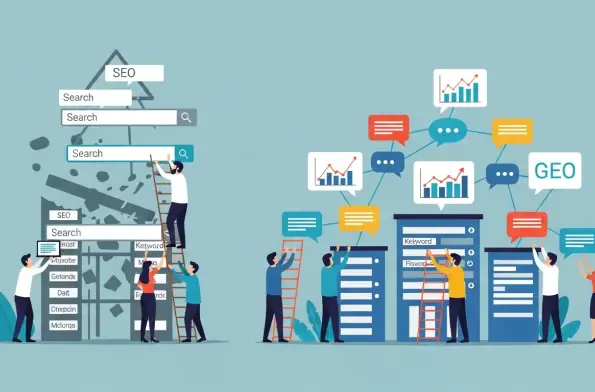
The long-held playbook for digital marketing, meticulously crafted around the singular goal of achieving a top ranking on Google, is rapidly becoming obsolete in the face of a new technological titan. For years, securing that coveted first-page spot was the undisputed hallmark of success, a virtual guarantee of brand visibility and a steady stream of inbound leads. However, the ground is shifting beneath our feet as conversational AI assistants like ChatGPT, Gemini, and Claude emerge as the new primary gateways to information. This profound migration, with as many as 40% of B2B buyers now initiating their product research through AI-driven dialogue, has created a critical “AI visibility crisis.” The startling new reality is that a company’s dominance in traditional Search Engine Optimization (SEO) no longer translates to inclusion in the recommendations provided by these powerful models, rendering even the most established market leaders invisible in the crucial, initial stages of the buying journey.
The Dawn of a New Optimization Era
In response to this disruptive shift, a new marketing discipline is solidifying its place as the necessary evolution of search strategy: Generative Engine Optimization (GEO). This approach moves beyond keywords and backlinks, focusing instead on the much more complex challenge of becoming a trusted, authoritative, and citable source for large language models. Success in GEO requires a fundamentally different methodology, one centered on establishing verifiable expertise, providing structured data that AI can easily parse, and producing content that answers the nuanced, multi-step queries users pose to conversational AI. A San Francisco-based startup, GrackerAI, is at the forefront of this movement, pioneering what it calls the industry’s first dedicated GEO platform, specifically engineered to navigate the high-stakes, technically complex cybersecurity market and bridge the widening chasm between legacy search success and AI-driven discovery.
The mechanics of this new optimization are far more dynamic than traditional SEO. A core function involves the continuous monitoring of a brand’s presence and mentions across all major AI platforms, creating a real-time map of digital influence. This goes beyond simple tracking; it provides deep analytics on how a company’s visibility stacks up against its direct competitors when users ask for product comparisons or solutions to specific security challenges. By analyzing these conversational patterns, the system identifies high-value, niche topics—from emerging threat detection protocols to intricate compliance automation frameworks—that are gaining traction within AI-powered research. This analytical foundation empowers go-to-market teams to shift from a reactive to a proactive strategy, allowing them to understand precisely where the crucial conversations are happening and strategically position their brand as a central, authoritative voice.
Engineering Trust with Artificial Intelligence
A pivotal component of an effective GEO strategy lies in the automated creation of hyper-specialized content that is engineered explicitly for AI consumption and citation. This process leverages an extensive network of over 200 authoritative data sources, including the National Vulnerability Database (NVD), the MITRE CVE list, and CISA’s Known Exploited Vulnerabilities (KEV) catalog. By synthesizing information from these unimpeachable sources, platforms can generate highly credible materials such as detailed threat intelligence reports, in-depth breach analyses, and comparative technology assessments. The goal is not merely to create content, but to build a dense web of verifiable information that large language models recognize as trustworthy, thereby increasing the likelihood that the brand will be cited as a definitive source in their generated responses to user queries.
Furthermore, this advanced approach relies on proprietary AI models that have been meticulously trained on the specialized terminology and complex concepts unique to the cybersecurity domain. Unlike generic content tools that can produce superficial or inaccurate information, these specialized models ensure the precision and technical depth required to resonate with a discerning audience of security professionals. This is combined with programmatic SEO techniques, which structure complex data—such as CVE breakdowns or regulatory compliance frameworks—into clean, logical patterns that large language models are known to prioritize for synthesis. This dual focus on semantic relevance and structural clarity is what enables a brand to effectively “teach” the AI that it is a premier expert in its field, making it an indispensable resource for answering sophisticated questions.
The Imperative for an AI-First Strategy
The urgency to adopt this new marketing paradigm is reinforced by a growing consensus among industry analysts and researchers. A foundational 2023 Princeton research paper, which first coined the term “GEO,” discovered that specific optimization techniques, such as including verifiable statistics and clearly sourced quotes, could boost a brand’s visibility within AI-generated answers by a significant 30-40%. This academic finding is powerfully complemented by a stark industry forecast from Gartner, which predicts a 25% decline in traffic volume from traditional search engines by 2026 as users increasingly turn to AI for more direct answers. This trend signals a fundamental change in user behavior that businesses cannot afford to ignore, compelling a strategic pivot toward platforms where future customers are congregating.
Within the cybersecurity sector, the need for an AI-centric strategy is even more acute. The World Economic Forum’s 2026 Global Cybersecurity Outlook revealed that an overwhelming 94% of industry leaders identify artificial intelligence as the single most important driver of change in their field. This sentiment is amplified by a landscape of escalating geopolitical risks and increasingly sophisticated fraud, where timely and accurate information is paramount. In this context, GEO is not just a novel marketing tactic but a strategic necessity. For cybersecurity vendors, ensuring their solutions and expertise are visible within AI-driven conversations is crucial for navigating this complex threat landscape and connecting with organizations seeking to defend against next-generation attacks.
Redefining a Successful Conversion
The early performance metrics from this new GEO frontier have demonstrated a clear and compelling return on investment. According to GrackerAI, initial adopters of its platform have achieved an impressive 40% increase in their AI visibility scores within the first 90 days. This enhanced visibility translated directly into tangible business growth, with these companies reporting a 40-80% uplift in signups originating from AI-driven referrals. Perhaps most significantly, the traffic generated from these AI-powered recommendations proved to be of exceptionally high quality, converting at a rate that was three to five times higher than traffic from any other marketing channel. This data suggests that AI assistants are not just a new source of leads but a powerful qualification engine, delivering prospects who are further along in their buying journey.
While the GEO field is still in its nascent stages, its foundational credibility has been bolstered by significant endorsements from major technology ecosystems. The validation from programs such as the NVIDIA Startups Program, Cloudflare Launchpad, and Microsoft for Startups has signaled strong enterprise readiness and has lent considerable weight to the long-term viability of this emerging discipline. As the digital landscape continued its irrevocable shift toward AI-native information discovery, the strategies that once defined market leadership were re-evaluated. The focus moved decisively from ranking on a list of blue links to earning a place as a trusted voice in an intelligent, dynamic conversation, a shift that has fundamentally reshaped the principles of digital marketing for the foreseeable future.