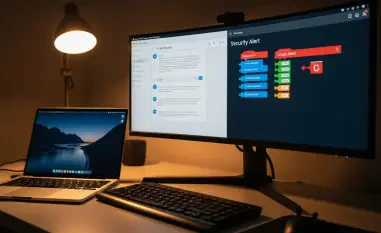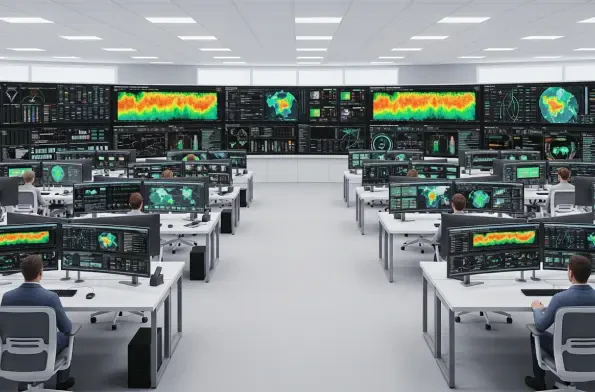
The window between the public disclosure of a software flaw and its active exploitation by threat actors has effectively vanished, leaving traditional security teams struggling to maintain a defenseless posture. This review examines how the Wazuh platform has transitioned from its origins as a log-oriented Security Information and Event Management (SIEM) tool into a comprehensive Vulnerability Management (VM) engine. By merging the detection of static weaknesses with real-time endpoint behavioral data, the platform attempts to solve the long-standing disconnect between identifying a risk and responding to a breach.
Introduction to Wazuh Vulnerability Management
Wazuh represents a significant departure from the siloed security architectures of the past decade. It operates on the core principle that visibility is the foundational element of any defensive strategy. Unlike legacy scanners that require heavy network overhead and intrusive probing, this technology utilizes an agent-based model to gather data directly from the host. This evolution from a traditional SIEM to a unified Extended Detection and Response (XDR) solution reflects the modern requirement for a single pane of glass where logs, integrity monitoring, and vulnerability data converge into a coherent story.
The relevance of this shift cannot be overstated in a technological landscape dominated by hybrid infrastructure. As organizations move away from reactive, periodic scanning cycles, the demand for continuous risk assessment has skyrocketed. Wazuh fills this gap by moving the vulnerability identification process into the operational flow. Instead of waiting for a monthly report that is obsolete the moment it is printed, security professionals can now view the state of their infrastructure in real-time. This proactive stance is essential for defending against modern exploits that weaponize vulnerabilities within hours of their appearance.
Core Components and Functional Architecture
Continuous Asset Visibility and Syscollector
At the heart of the system lies the Syscollector module, a sophisticated scanning agent designed to provide granular visibility into the internal state of every monitored endpoint. This module does not just look for security flaws; it maintains a comprehensive inventory of the hardware, operating system, and every installed software package. The technical significance here is the transition from “active scanning” to “state monitoring.” By periodically gathering this data and sending it to the central manager, Wazuh ensures that the inventory is always reflective of the actual environment, regardless of how often applications are added or removed.
This continuous monitoring is particularly vital for tracking “shadow IT” and unauthorized software installations. When Syscollector identifies a change in the package list, the system immediately cross-references the new data against its vulnerability databases. This eliminates the visibility gap inherent in traditional scanners that only see what is connected during a specific scan window. Furthermore, because the collection is handled locally by the agent, it consumes significantly less network bandwidth than remote scanners, allowing for more frequent updates without impacting the performance of critical business systems.
Unified Vulnerability Detection and CTI Integration
The intelligence behind the detection is driven by a powerful Cyber Threat Intelligence (CTI) engine. This component acts as a centralized repository that aggregates data from diverse sources, including the National Vulnerability Database (NVD) and specific advisories from vendors like Red Hat, Canonical, and Microsoft. The platform does the heavy lifting of normalization, taking disparate data formats and presenting them in a unified view. This allows a security analyst to see exactly which systems are affected by a specific CVE without having to manually correlate vendor-specific patches with general vulnerability identifiers.
Moreover, the CTI engine provides the context necessary for effective prioritization. By integrating public exploit data and severity scores, it helps teams move past the overwhelming volume of “high” and “critical” alerts. This integration is not just a list of facts; it is a strategic tool that identifies which vulnerabilities are currently trending in the wild. This intelligence-led approach ensures that the remediation effort is focused on the paths of least resistance that attackers are most likely to take, rather than simply checking boxes on a compliance list.
Behavioral Monitoring and Exploit Detection
What sets this platform apart from dedicated vulnerability scanners is its ability to bridge the gap between a theoretical flaw and an active attack. Through endpoint telemetry, Wazuh monitors system calls, process executions, and file integrity in real-time. When a vulnerability is identified on a host, the system does not just sit and wait for a patch; it increases its vigilance for the specific behaviors associated with that flaw’s exploitation. For example, if a web server is known to be vulnerable to a remote code execution (RCE) bug, the platform can alert administrators to any unusual child processes spawned by the web service.
This synergy between vulnerability data and behavioral monitoring creates a multi-layered defense. It acknowledges that immediate patching is not always possible, especially in environments where uptime is critical. By providing visibility into the “act” of exploitation, it gives security teams a safety net. They can detect an intrusion attempt in progress, correlate it with the known vulnerability on that specific host, and take containment actions—such as isolating the endpoint—long before a traditional scanner would have even registered a problem.
Recent Innovations and Emerging Trends in VM
The field of vulnerability management is currently navigating the transition toward “exploit-driven” security models. This trend is a direct response to the weaponization of vulnerabilities, where the focus has shifted from the severity of the flaw to the probability of its use in an actual campaign. Wazuh has adapted to this by incorporating more dynamic threat intelligence that accounts for the active lifecycle of a bug. This means the system can prioritize a “medium” severity vulnerability that has a publicly available exploit script over a “critical” one that is purely theoretical.
Furthermore, the rise of ephemeral infrastructure, such as containers and microservices, has forced a redesign of how vulnerabilities are tracked. Modern workloads may only exist for minutes, making traditional IP-based tracking useless. The technology has evolved to treat these assets as logical entities, integrating with container orchestration platforms to scan images before they are deployed and monitor them while they are running. This ensures that the security posture remains consistent even as the underlying infrastructure fluctuates wildly in response to demand.
Real-World Applications and Industry Impact
In high-stakes sectors like finance and healthcare, the deployment of Wazuh has shifted the burden of proof from the auditors to the security systems. These industries require rigorous remediation tracking and audit validation to meet regulatory standards like PCI DSS or HIPAA. Instead of manual spreadsheets, organizations use the platform’s automated dashboards to track the lifecycle of a vulnerability from discovery to resolution. This creates a transparent audit trail that proves the organization is actively managing its risk surface rather than just performing annual “box-ticking” exercises.
Software development houses have also found unique value in integrating vulnerability management into their DevOps pipelines. By using the platform to monitor build servers and production environments, developers receive immediate feedback on the security of the libraries they are using. This “shift-left” approach reduces the cost of security, as it is much cheaper to swap out a vulnerable library during development than it is to respond to a breach in production. It fosters a culture where security is a shared responsibility rather than an external obstacle.
Technical Challenges and Market Obstacles
Despite its strengths, the technology faces the persistent challenge of alert fatigue. The sheer volume of CVE data published daily can overwhelm even the most sophisticated SOC teams. While the platform provides tools for filtering and prioritization, the initial configuration can be daunting for smaller organizations without dedicated security engineers. There is a fine line between providing comprehensive data and drowning the user in noise, and navigating this balance remains a primary hurdle for any broad-scale vulnerability management solution.
Additionally, managing vulnerabilities in air-gapped or legacy environments presents technical obstacles. Because the platform relies on constant updates from external threat feeds, disconnected systems require manual data ingestion, which can lead to delays in detection. Legacy systems often run outdated operating systems that may not support the latest agent versions, creating “blind spots” in the organizational footprint. While development efforts are focused on improving context-aware prioritization and reducing false positives, these structural challenges require ongoing attention to ensure total environment coverage.
The Future of Proactive Security Operations
The trajectory of proactive security is moving toward deeper automation within the remediation lifecycle. We are entering an era where the system will not only identify a vulnerability but also suggest and, in some cases, automatically implement temporary mitigations. This could involve creating local firewall rules to block the specific ports used by a vulnerable service or applying virtual patches at the host level. The integration of artificial intelligence will likely play a role in predictive risk modeling, forecasting which assets are most likely to be targeted based on global attack trends and local configuration quirks.
Long-term, the convergence of incident response and risk management will likely lead to a more resilient digital infrastructure. As the distinction between “preventing” and “detecting” blurs, the focus will shift toward “mean time to containment.” Continuous vulnerability monitoring will serve as the engine for this shift, providing the data necessary to make split-second decisions during an incident. The goal is to move from a state of constant firefighting to a streamlined operation where risks are understood, monitored, and mitigated with surgical precision.
Assessment and Final Synthesis
The evaluation of the current state of vulnerability management reveals a fundamental shift in the cybersecurity paradigm. We have moved beyond the era of compliance-driven checklists and entered a phase where intelligence-driven operational models are the only way to maintain a defensible network. The transition from static, periodic scanning to a continuous, integrated approach has provided defenders with the visibility they need to compete with increasingly efficient threat actors. This model has proven that knowing where the holes are is only half the battle; the real value lies in knowing who is trying to crawl through them.
Ultimately, the effectiveness of a platform like Wazuh was found in its ability to unify disparate security disciplines. By combining asset inventory, vulnerability detection, and behavioral monitoring, it provides a level of context that standalone scanners cannot match. While technical hurdles such as alert volume and legacy support remain, the ongoing development toward automation and predictive modeling suggests a bright future for proactive defense. Organizations that successfully adopted these continuous monitoring strategies have demonstrably reduced their attack surface and improved their overall resilience against the modern exploit landscape.