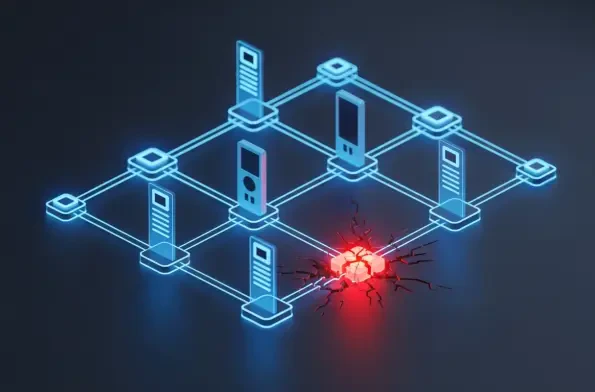
A forgotten router collecting dust in a home office has become a potent weapon for cybercriminals, a scenario now playing out globally as a critical zero-day vulnerability in D-Link hardware highlights a dangerous and growing trend. As millions of legacy devices remain connected to the internet long after their manufacturers have stopped supporting them, they create permanent, unpatchable entry points for attackers. This analysis examines the rising threat of end-of-life device insecurity, explores its real-world impact through the D-Link case, and outlines the future implications for consumers and businesses alike.
The Anatomy of an EoL Security Crisis
The Escalating Risk Profile of Legacy Devices
The recent discovery of a high-severity zero-day vulnerability, tracked as CVE-2026-0625, underscores the acute risk posed by aging infrastructure. Assigned a critical CVSS score of 9.3, this flaw targets a range of discontinued D-Link DSL gateways, devices still found in countless homes and small offices. Cybersecurity intelligence firm VulnCheck, corroborated by data from The Shadowserver Foundation, confirmed that this vulnerability has been under active exploitation since late November 2025, turning these obsolete routers into active threats.
This campaign is not an isolated incident but rather the continuation of a long-term attacker focus on this specific device category. Security researchers have drawn direct parallels between the current exploitation and the DNSChanger malware campaigns that plagued D-Link firmware between 2016 and 2019. This historical connection demonstrates a persistent and calculated strategy by threat actors to target hardware that is no longer receiving security updates, knowing these devices represent a path of least resistance into a network.
Real World Exploitation The D Link Command Injection Flaw
At its core, CVE-2026-0625 is an OS command injection flaw within the dnscfg.cgi library, a component responsible for managing the device’s DNS settings. The vulnerability arises from a fundamental failure to sanitize user-supplied data. Consequently, a remote, unauthenticated attacker can inject arbitrary shell commands directly into the DNS configuration parameters, allowing for complete remote code execution (RCE).
Once exploited, this flaw grants the attacker total control over the affected device. Common but long-unsupported models, including the DSL-2740R and DSL-2640B, are among those vulnerable. For an attacker, gaining control of a router is a significant victory, providing an ideal pivot point for further intrusions, traffic interception, or other malicious activities within the compromised network.
The Manufacturer Stance A Hardline on Obsolescence
In response to the discovery, D-Link issued an official statement confirming that the vulnerability impacts legacy products that reached their End of Life (EoL) or End of Service (EoS) status more than five years ago. This confirmation aligns with a standard and widely adopted industry policy where manufacturers cease all forms of support for discontinued products.
This policy includes the termination of firmware updates, security patches, and any form of engineering maintenance. Therefore, D-Link has stated definitively that no patch will be developed or issued to remediate CVE-2026-0625. This decision solidifies the status of these devices as permanently vulnerable, leaving the responsibility of mitigation entirely in the hands of the end-user.
Projecting the Future Permanent Threats and Proactive Defenses
The long-term implications of permanently compromised EoL hardware are severe. These devices often become unwitting soldiers in massive DDoS botnets, serve as nodes in illicit proxy services for anonymizing criminal activity, or act as persistent backdoors into otherwise secure corporate and home networks. Since they will never be patched, they offer threat actors a stable and reliable foothold for launching future attacks.
This situation creates a significant challenge for users, who are often unaware of the EoL status of their hardware or the security risks it entails. The cost and inconvenience of replacing a seemingly functional device can lead to inertia, allowing millions of these digital liabilities to remain active. This dynamic ensures a continuous supply of vulnerable targets for cybercriminals.
The D-Link incident is a clear indicator of a broader trend that will continue to accelerate. Threat actors are systematically identifying and targeting entire classes of unsupported devices, effectively creating a permanent, shadow infrastructure of vulnerable endpoints. As the Internet of Things expands, the pool of potential EoL targets will only grow, making proactive device lifecycle management more critical than ever.
Conclusion The Imperative of Modernization
This analysis demonstrated that End-of-Life devices represent a clear and present danger to global cybersecurity, a fact starkly exemplified by the active and unmitigated exploitation of legacy D-Link routers. The incident was a powerful reminder that vendor support cycles are not merely a sales tactic but a critical component of a healthy security posture.
Ultimately, the hardline stance taken by manufacturers on EoL support, while economically practical, shifted the security burden entirely to the consumer. The only effective mitigation strategy echoed D-Link’s own recommendation: users of the affected models had to immediately retire and replace the vulnerable hardware. This case underscored the absolute imperative of modernization to defend against an ever-evolving threat landscape.