The very digital infrastructure that powers modern commerce and innovation has become the most contested and valuable territory for a new generation of sophisticated cybercriminals. As organizations finalize their rapid migration to cloud services, embracing the agility of containers, Kubernetes, and serverless architectures, they have inadvertently created a new, lucrative battleground. In this environment, a new class of malware has emerged, purpose-built to exploit the unique characteristics of the cloud. This article analyzes the rising trend of these cloud-native threats, dissecting their characteristics and impact by examining a groundbreaking new framework: VoidLink.
The Ascent of Cloud Targeted Attacks
The Data Behind the Threat Migration
The strategic shift in cyberattacks is not a theoretical exercise; it is a direct response to a fundamental change in enterprise computing. Market data from industry analysts like Gartner and Flexera consistently shows an overwhelming migration to cloud services, with a vast majority of new workloads being deployed in public and private cloud environments. Within this ecosystem, Linux has become the undisputed lingua franca, serving as the foundational operating system for servers, the Docker containers that package modern applications, and the Kubernetes platforms that orchestrate them.
This operational reality has not been lost on malicious actors. Recent security reports, including comprehensive analyses from Check Point Research, document a strategic pivot by advanced threat groups. These actors are increasingly diverting resources away from traditional Windows endpoint attacks toward a concentrated focus on Linux-based cloud infrastructure. Consequently, malware is evolving at an accelerated pace, transforming from simple cryptomining scripts and DDoS bots into comprehensive post-exploitation platforms meticulously designed to navigate and control complex cloud environments.
Case Study The VoidLink Malware Framework
Embodying this new generation of threats is VoidLink, a highly sophisticated, modular malware framework first identified in the wild in December 2025. Engineered from the ground up for Linux-based cloud and containerized systems, VoidLink represents a quantum leap in attacker capability. Its core architecture, written in modern, efficient languages like Zig, is built around a flexible Plugin API. This design allows operators to dynamically load specific capabilities, tailoring their attack to the target environment without redeploying the entire implant, a philosophy reminiscent of advanced offensive security tools.
VoidLink’s power lies in its deep, native understanding of its surroundings and its arsenal of advanced functions. The malware can immediately detect whether it is operating within AWS, Google Cloud, or Azure, and further recognize if it is inside a Docker or Kubernetes environment. To remain hidden, it employs an array of rootkit-like techniques, including LD_PRELOAD hooking and the use of eBPF programs for stealth. It also features a suite of anti-analysis functions and calculates a “risk score” based on the target’s security posture, intelligently adjusting its operational tempo to evade detection.
Once established, the framework unleashes a rich ecosystem of 37 plugins dedicated to post-exploitation. These modules enable comprehensive reconnaissance, harvesting of critical credentials like SSH keys and cloud access tokens, and seamless lateral movement across the network. Specific plugins are designed for classic cloud attacks, including container escape attempts, Kubernetes cluster discovery, and the exploitation of common cloud service misconfigurations. To cover its tracks, VoidLink also includes anti-forensic tools capable of wiping logs and altering file timestamps, making investigation incredibly difficult.
Insights from Industry Analysis
The emergence of VoidLink has sent a clear signal to the cybersecurity community about the maturity of cloud-native threats. Researchers at Check Point Research described the framework as “impressive” and “far more advanced than typical Linux malware,” drawing direct comparisons between its modular design and the architecture of legitimate penetration testing platforms like Cobalt Strike. This assessment underscores a critical point: VoidLink is not a simple tool but a complete, professional-grade attack platform.
The craftsmanship of the framework reveals the high level of expertise possessed by its creators. The threat actors behind VoidLink demonstrate fluency across multiple programming languages, including Go, Zig, and C, as well as a deep, specialized knowledge of operating system internals and modern web frameworks. This combination of skills indicates that the group is not only well-resourced and dedicated but also possesses the technical acumen to build and maintain tooling that can bypass the defenses of mature, cloud-first organizations.
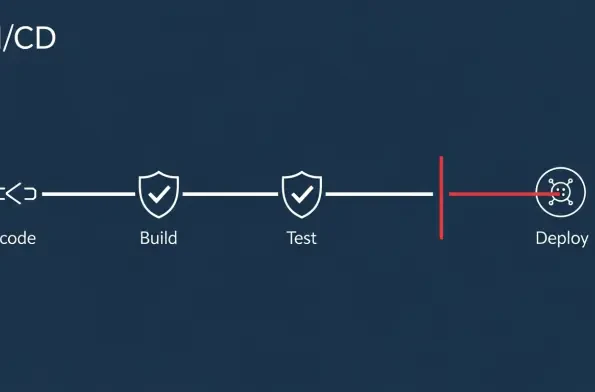
Expert analysis of VoidLink’s capabilities and targets points to a chilling strategic objective: supply chain compromise. The malware’s intense focus on harvesting developer credentials, SSH keys, and data from version control systems suggests its primary goal is to infiltrate the very heart of the software development lifecycle. By compromising developers or CI/CD pipelines, attackers can inject malicious code into trusted software, setting the stage for widespread, high-impact attacks that affect thousands of downstream customers.
The Future of Cloud Security and Emerging Threats
The sophistication demonstrated by VoidLink provides a clear blueprint for the future trajectory of cloud-native malware. Threats will likely evolve with greater automation, potentially integrating AI and machine learning models to conduct adaptive evasion techniques that can react to defensive measures in real time. The attack surface will also expand, with a new focus on compromising serverless functions, managed database services, and other platform-as-a-service (PaaS) offerings that are becoming central to modern application development.
This evolution presents immense challenges for security teams. The ephemeral and transient nature of containers, which can be created and destroyed in seconds, severely complicates digital forensics and incident response. Furthermore, persistent confusion over the shared responsibility model often leaves critical security gaps, while the complexity of multi-cloud and hybrid environments creates significant visibility issues. Traditional security tools are simply not equipped to monitor the east-west traffic and API-driven interactions that characterize these new architectures.
The broader industry implications are profound. A successful large-scale supply chain attack, enabled by a tool like VoidLink, could erode trust in digital services and the open-source ecosystem. In response, a significant rise in demand for integrated Cloud-Native Application Protection Platforms (CNAPPs) is already underway. These platforms offer a unified solution that provides security visibility and control from the earliest stages of development (“code”) all the way through to production runtime (“cloud”), representing a necessary shift in defensive strategy.
Conclusion Adopting a Cloud Native Defense Posture
The analysis of recent trends revealed that the threat landscape’s shift toward the cloud was both swift and undeniable. Sophisticated new malware, exemplified by the VoidLink framework, demonstrated a formidable leap in attacker capability, targeting the foundational infrastructure of the modern enterprise with unparalleled precision and stealth. This development confirmed that adversaries had fully adapted their tactics to the new realities of cloud computing.
It became abundantly clear that traditional, perimeter-based security models were obsolete and fundamentally ineffective against threats designed to operate inside the cloud. These legacy approaches failed to address the dynamic, API-driven, and decentralized nature of cloud-native workloads, leaving organizations dangerously exposed to malware that could easily bypass network firewalls and endpoint agents.
The evidence compelled organizations to adopt a proactive, cloud-native security strategy. This imperative called for the implementation of runtime security for containers and Kubernetes, the securing of CI/CD pipelines to prevent supply chain attacks, the enforcement of strict identity and access management (IAM) policies, and the comprehensive embrace of a zero-trust security model for all cloud workloads.