Effective cybersecurity is often mistakenly framed as a battle of algorithms and firewalls, but the true frontline is the human element. For Daria Catalui, a prominent cyber educator at Allianz and an advisor to the European Union Agency for Cybersecurity (ENISA), security is a people-first endeavor that bridges the gap between professional data protection and personal digital safety. By championing the concept of the “human firewall,” she advocates for a strategy where individuals are not just potential vulnerabilities but the strongest line of defense. This conversation explores the necessity of public-private partnerships, the practical application of “security by design,” and the evolving role of the Chief Information Security Officer (CISO) in an era where AI and social engineering are rewriting the rules of engagement.
Cybersecurity is often viewed as a purely technical problem, but how do you define the “human firewall” in a way that balances individual responsibility at home and work? What specific behaviors should employees adopt to protect business data while staying safe in their personal lives?
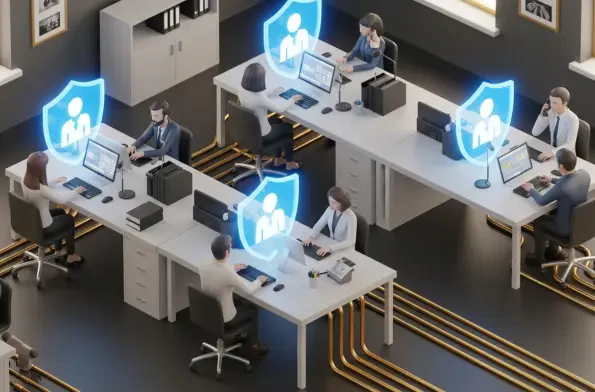
The human firewall is essentially the psychological and behavioral counterpart to technical security systems, representing the collective vigilance of every person within an organization or society. It is a symbiotic relationship because when you teach “Bob and Eve” in an office how to identify a suspicious link, they carry that skepticism home to protect their personal bank accounts and family data. At work, employees must adopt a mindset of constant verification, especially regarding business data, which requires a much higher level of classification and care than public information. This means scrutinizing every email sender, being wary of unexpected links, and understanding that their actions directly impact the organization’s resilience. Ultimately, the goal is for security behaviors to become second nature, ensuring that whether someone is handling a corporate press release or a private password, they are applying the same foundational principles of digital hygiene.
Social engineering often relies on high-pressure tactics or fake authority to deceive targets. What are the practical steps for implementing a “team codeword” system to verify identities during suspicious calls, and how do you ensure these protocols are actually remembered during a real crisis?
Implementing a codeword system is a deceptively simple yet highly effective way to neutralize the “authority” and “urgency” tactics used in voice phishing or deepfake attacks. Teams or families should agree on a specific, non-obvious word or phrase—such as the name of a specific book—that serves as a pre-shared secret to verify identity during a high-stakes call. To make this work, you must move beyond just setting the code; you need to practice it during face-to-face meetings or routine team calls to ensure it stays fresh in everyone’s mind. If a suspicious caller claims to be your boss demanding an urgent wire transfer, you simply ask them to confirm the agreed-upon word. Without consistent “exercises” and drills to reinforce the memory of this protocol, people are likely to forget it the moment a real crisis triggers a high-stress emotional response.
Public and private sectors often share the same digital risks. How can organizations effectively utilize government-provided toolkits, and what are the primary benefits of sharing internal innovations, like voice phishing exercises, with public authorities to create a win-win scenario for national security and corporate safety?
Organizations can significantly bolster their defenses by tapping into existing resources like the ENISA “awareness-in-a-box” toolkit, which provides ready-made frameworks for cybersecurity training. This creates a win-win scenario because if a government successfully educates its citizens, those individuals bring that knowledge into the private companies where they work. Conversely, I believe in taking the innovations we develop within a corporate environment, such as sophisticated voice phishing simulations, and sharing those methodologies with public institutions to strengthen national resilience. This public-private partnership ensures that we aren’t reinventing the wheel in isolation. When the two sectors collaborate, we create a more robust “human firewall” that protects the entire digital ecosystem, from individual citizens to multinational financial infrastructures.
Many companies try to fix security flaws after a product is already built. How does applying “security by design” and “privacy by design” from the start change the development timeline, and what are the most effective ways to classify data so that security controls match actual business value?
Applying security and privacy by design shifts the focus from reactive patching to proactive construction, which actually saves time and resources in the long run. If you only start embedding security controls at the midpoint of development, you face the nightmare of trying to retrofit complex requirements onto a finished structure, which often leads to broken functionality. By starting at the beginning, you ensure the product is inherently viable for the modern cyber landscape without having to slow down innovation later. A critical part of this process is data classification: you must distinguish between a sensitive business secret and a standard press release. This allows the organization to allocate its most rigorous security controls to the data that carries the highest business value, ensuring that resources are used efficiently and effectively.
The rapid adoption of AI has created a “jungle” of new risks and ethical dilemmas. What specific governance frameworks or use cases should businesses prioritize to stay secure, and how can employees be encouraged to “play around” with the technology safely to build their foundational cyber education?
Navigating the AI “jungle” requires a clear map of governance and a deep focus on ethical use cases rather than just following the hype. Organizations should prioritize frameworks that emphasize human-in-the-loop controls and ethical data handling, ensuring that AI is only deployed where it truly adds value and can be monitored. To build a foundational education, we should encourage employees to “test and play around” with these technologies in a controlled manner to demystify how they work. This hands-on experience helps them understand the basics of AI-driven threats, such as how easily a deepfake can be generated, which in turn makes them more vigilant. By fostering a culture of safe experimentation, we transform a daunting technological shift into a manageable tool for the workforce.
CISOs often struggle to get a seat at the decision-making table. How can security leaders transition from technical jargon to “business language” when speaking to the board, and why is it vital to communicate about mitigation strategies before an incident occurs rather than only afterward?
To be effective, CISOs must stop viewing cybersecurity as a siloed technical problem and start framing it as a vital component of business governance. This means moving away from bits and bytes and instead discussing risk, resilience, and the continuity of business operations when presenting to the board. It is crucial to communicate about mitigation strategies and proactive measures frequently, rather than waiting for a breach to happen to have a seat at the table. If an incident does occur, the conversation should shift to what was learned and how the organization recovered, demonstrating the maturity of the security program. When security leaders speak the language of the business, they ensure that the CISO role is integrated at the highest level of corporate strategy, where it truly belongs.
What is your forecast for the future of the human firewall?
I believe we are moving toward a period where the distinction between “technical” and “human” security will almost entirely disappear. In the coming years, we will see the human firewall become even more integrated with AI-driven automation, where humans act as the critical decision-makers in an increasingly fast-paced digital environment. This will require a significant leap in cyber education, moving from simple annual training sessions to continuous, real-time learning embedded into our daily digital interactions. Ultimately, as the maturity level of the field grows, being “cyber-aware” will become as fundamental a life skill as reading or writing, making the human firewall the most adaptive and resilient layer of our global defense.