The digital threat landscape has become markedly more dangerous with the arrival of a new ransomware-as-a-service operation, known as Vect, which demonstrates a level of operational maturity and technical sophistication rarely seen in a fledgling group. Its emergence in late 2025 serves as a stark reminder that the cybercrime ecosystem is not merely expanding but is also evolving, with threat actors adopting corporate-like structures and developing bespoke tools to maximize disruption and profit. Vect is not just another ransomware variant; it represents a calculated business venture poised to inflict significant damage on a global scale, compelling security professionals to reevaluate their defensive postures against this new and formidable adversary.
The Expanding Shadow of Ransomware as a Service
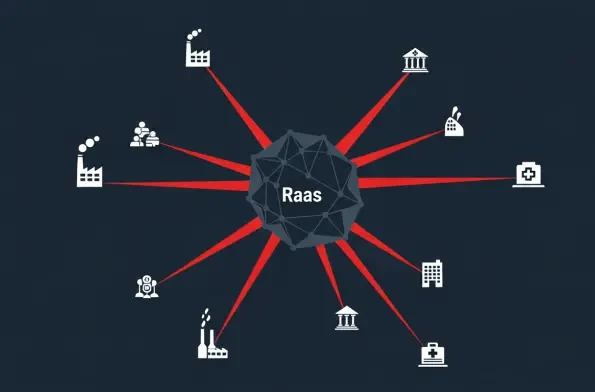
The ransomware-as-a-service model has transformed digital extortion from a specialized, high-skill crime into a sprawling, accessible criminal industry. What began as a niche threat has matured into a global enterprise, complete with developers, operators, affiliates, and access brokers, each playing a distinct role in a well-defined supply chain. This professionalization allows even threat actors with limited technical skills to deploy highly destructive attacks, lowering the barrier to entry and fueling a dramatic increase in the volume and frequency of ransomware incidents worldwide.
This proliferation has created a fiercely competitive underground market where RaaS operators vie for the most effective affiliates. The business of digital extortion now includes sophisticated marketing, affiliate support, and tiered payment structures. RaaS platforms provide the core malware, negotiation portals, and data leak sites, empowering their partners to focus solely on gaining initial access to victim networks and deploying the payload. This division of labor makes the entire ecosystem more efficient, resilient, and difficult for law enforcement to dismantle, as disrupting one affiliate does little to affect the core operation.
The technological frameworks underpinning these services are increasingly advanced. RaaS kits often feature modular designs, allowing for customization and updates that can quickly bypass traditional security measures. By providing a turnkey solution for extortion, these platforms have democratized cybercrime, enabling a broader range of malicious actors to target organizations of all sizes. The consequences are far-reaching, with attacks frequently disrupting essential services, crippling supply chains, and threatening critical infrastructure, turning a technical problem into a significant societal risk.
Vect’s Arrival a New Benchmark in Cybercrime Sophistication
Vect has distinguished itself from the crowded field of RaaS providers by demonstrating an unusual degree of maturity and technical prowess from its inception. The group’s recruitment program, launched in December 2025, immediately signaled its professional approach, targeting experienced affiliates to execute its campaigns. Unlike many contemporaries who repackage leaked code from defunct operations like Conti or Lockbit, Vect’s operators claim to have developed their malware from the ground up, suggesting a dedicated and skilled development team behind the scenes. This investment in custom tooling indicates a long-term strategy aimed at evading signature-based detection and establishing a unique, formidable presence in the cybercrime market.
Unpacking the Arsenal Vect’s Advanced Technical Capabilities
At the core of Vect’s threat is its custom-built malware, written in C++, a deliberate choice that provides greater control over performance and evasion capabilities compared to repurposed code. This bespoke approach allows the operators to integrate advanced features tailored to their attack methodology. One of the most significant is the use of the ChaCha20-Poly1305 encryption algorithm, which is notably faster than the more common AES standard on systems lacking hardware acceleration. This speed is further amplified by an intermittent encryption technique, where the malware strategically encrypts only portions of a file, rendering it unusable while drastically reducing the time required to complete the attack.
Vect’s tactical execution is designed for maximum stealth and impact. The malware supports cross-platform targeting, enabling it to compromise Windows, Linux, and VMware ESXi environments, a crucial capability for attacking the complex IT infrastructures of modern enterprises. Furthermore, it can execute in Safe Mode, a technique used to bypass or disable many endpoint security tools that do not operate in this stripped-down environment. The group’s affiliate model also provides clues to its origins, with a waived entry fee for applicants from the Commonwealth of Independent States (CIS) strongly suggesting that its operators are based within the region.
Measuring the Initial Damage and Projecting Future Threats
Although Vect is a new operation, it has already demonstrated its effectiveness with successful attacks against organizations in Brazil and South Africa. These initial strikes serve as a proof of concept, validating the malware’s capabilities and establishing the group’s credibility within the cybercriminal underground. These victims were not random targets but calculated choices to build a reputation and attract skilled affiliates to the platform.
Following the playbook of modern ransomware gangs, Vect employs a double extortion model to maximize its leverage over victims. After encrypting files, the attackers exfiltrate sensitive data and threaten to publish it on their public-facing leak site if the ransom is not paid. Both of its inaugural victims have already been listed, applying immense pressure by combining operational disruption with the risk of reputational damage and regulatory penalties. Based on its advanced technical foundation and professional operational model, Vect is positioned for rapid expansion and is expected to become a significant threat to organizations globally in the coming months.
Confronting the Unseen Enemy Challenges in Defeating Vect
One of the most significant challenges in combating Vect is the robust operational security (OPSEC) its operators have implemented. By using Monero for ransom payments, the group ensures financial transactions are nearly untraceable, obscuring the money trail that law enforcement often relies on for investigations. Affiliate communications are secured with the peer-to-peer TOX protocol, while all infrastructure is hosted exclusively on TOR hidden services, leaving no clearnet footprint. This multi-layered approach to anonymity creates a formidable cloak, making it exceedingly difficult for researchers and authorities to monitor their activities or gather intelligence.
The sophistication and maturity of the Vect operation strongly suggest that it is run by experienced cybercriminals, who may be rebranding from a previous, now-defunct group. This common tactic allows seasoned actors to shed unwanted attention from law enforcement, evade sanctions, and relaunch with improved tools and tactics. However, it also creates significant attribution hurdles. Without clear links to past identities, defenders are forced to treat the group as an entirely new entity, losing the benefit of historical threat intelligence that could otherwise inform defensive strategies.
Finally, the speed of Vect’s encryption process presents a critical tactical challenge for security teams. By leveraging intermittent encryption, the malware can lock down vast amounts of data in a fraction of the time required by traditional ransomware. This compressed attack timeline dramatically shortens the window for detection and response. Automated security controls and incident response plans must be capable of acting almost instantaneously to isolate infected systems and prevent the widespread data unavailability that Vect is engineered to cause.
The Regulatory Response and Compliance Imperatives
The rise of sophisticated RaaS operations like Vect has prompted a firm response from global law enforcement agencies, which have intensified their efforts to disrupt the cybercrime ecosystem. International collaboration has led to takedowns of RaaS infrastructure and the arrest of key affiliates, but the decentralized nature of these groups makes them a resilient target. For victim organizations, the legal landscape is increasingly complex, with government advisories often discouraging ransom payments that could fund criminal and sanctioned entities.
Vect’s use of a double extortion model places victims in a difficult position regarding data breach notification laws. A failure to pay the ransom almost guarantees the public release of sensitive data, triggering stringent regulatory requirements for disclosure in jurisdictions like the European Union under GDPR or in various U.S. states. The resulting financial penalties, legal liabilities, and reputational damage can often exceed the cost of the initial ransom demand, creating a powerful incentive for victims to pay despite official guidance to the contrary.
In response to the growing threat, government agencies are issuing more frequent and detailed advisories to help organizations harden their defenses. These bulletins often contain technical indicators of compromise and strategic guidance based on the observed tactics of groups like Vect. Moreover, navigating financial sanctions has become a critical aspect of incident response. Paying a ransom to an entity on a sanctions list, even unknowingly, can lead to severe penalties, forcing organizations to conduct thorough due diligence in high-pressure situations to ensure compliance.
What Vect’s Emergence Signals for the Future of Cybersecurity
The arrival of Vect signals a continuing trend toward increased professionalism and operational maturity within the RaaS ecosystem. These groups are no longer just loose collectives of hackers but are structured more like illicit software companies, with dedicated development cycles, affiliate management, and sophisticated marketing strategies. This next generation of RaaS is likely to feature more custom-built, highly evasive malware, making detection more challenging for conventional security solutions and raising the baseline level of threat that all organizations must prepare for.
Vect’s advanced feature set and efficient operational model could also disrupt the existing cybercrime market, potentially influencing the tactics of competing threat groups. As RaaS operators vie for the most skilled affiliates, successful innovations in malware speed, evasion, and platform usability are quickly replicated across the landscape. Vect’s effective use of intermittent encryption and Safe Mode execution may become standard features in other ransomware families as rival groups adapt to keep their offerings competitive.
Furthermore, Vect’s debut reinforces the persistent trend of rebranding among established cybercriminals. Experienced actors rarely retire; instead, they dissolve old operations under law enforcement pressure and reemerge with new names and upgraded toolsets. This cycle of disappearance and reappearance makes long-term tracking and attribution incredibly difficult. It underscores the reality that defeating a particular ransomware brand is often a temporary victory, as the underlying talent and experience inevitably resurface to pose a new threat. This dynamic perpetuates an ongoing arms race, where defenders must constantly adapt to the evolving tactics of a determined and persistent adversary.
A Strategic Blueprint for Defense and Concluding Analysis
The analysis of Vect’s operational model revealed several key areas that organizations needed to prioritize for defense. The group’s reliance on common initial access vectors, such as exposed remote services and vulnerability exploitation, highlighted the continued importance of fundamental security hygiene. Its cross-platform capabilities underscored the necessity of a unified security strategy that protected not just Windows endpoints but also Linux servers and virtualized environments. The intelligence gathered from these early attacks provided a clear, actionable blueprint for proactive defense.
To effectively counter threats like Vect, organizations were urged to harden their network perimeters, with a specific focus on securing edge appliances and remote access solutions like VPNs and RDP. Promptly applying security patches, restricting administrative interface exposure to the internet, and enforcing multi-factor authentication for all remote and privileged accounts were identified as critical steps. These measures directly addressed the likely entry points that Vect’s affiliates would exploit, significantly reducing the external attack surface.
Inside the network, a multi-layered approach focused on containment and detection proved essential. Network segmentation was recommended to limit an attacker’s lateral movement, particularly by restricting access to hypervisor management planes. Security teams were advised to enhance their monitoring capabilities to detect suspicious Safe Mode boots and the rapid, selective file modifications characteristic of intermittent encryption. By centralizing logs and telemetry, organizations could more quickly scope an intrusion and contain the threat before widespread data encryption occurred.
Ultimately, defeating a fast-moving threat like Vect required a combination of preventative controls and proactive security measures. The deployment of dedicated anti-ransomware solutions, which could block malicious binaries pre-execution and detect anomalous runtime behaviors, was deemed critical. This technological defense, paired with proactive threat hunting to search for signs of compromise, formed the basis of a resilient security posture. Confronting the next generation of RaaS demanded a strategic shift from reactive incident response to a continuous, intelligence-driven defense designed to anticipate and counter an adversary’s every move.