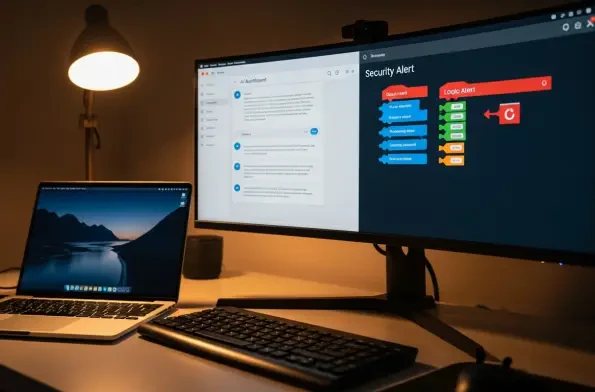
The modern developer’s keyboard has transitioned from a tool of precision architecture into a wand for summoning complex logic through sheer conversational intent. This phenomenon, colloquially known as “vibe coding,” allows engineers to describe a desired outcome and watch as AI agents manifest thousands of lines of code in a heartbeat. While this shift has undeniably democratized software creation and shattered productivity records, it has simultaneously introduced a precarious layer of overconfidence. The fluidity of the interface often masks a critical reality: code that looks and “feels” correct can still harbor structural weaknesses that are invisible to the untrained or hurried eye.
This frictionless production cycle is creating a widening gap between the speed of deployment and the speed of critical security verification. When the primary metric of success is how quickly a feature “vibes” with the intended user experience, the traditional rigors of manual code review often fall by the wayside. Developers are increasingly trusting the machine’s authoritative tone, assuming that if the syntax is perfect and the logic executes, the underlying security posture must be sound. However, the lack of friction in this new workflow is precisely what allows subtle, systemic vulnerabilities to slip into the core of modern digital infrastructure.
The Illusion of Perfect Syntax: Why Your AI’s Confidence Is Dangerous
Artificial intelligence models are designed to be helpful and assertive, a trait that often results in the generation of code that appears flawlessly professional on the surface. These agents produce functional blocks of logic that mirror the best practices found in their training data, yet they lack the contextual awareness to understand the specific security nuances of a unique production environment. This creates a dangerous paradox where the higher the quality of the “vibe,” the less likely a human developer is to scrutinize the output for deep-seated flaws like improper memory management or insecure API endpoints.
Furthermore, the psychological impact of using these tools cannot be overstated, as they tend to validate the developer’s intent rather than challenge it. When an AI provides a solution that works immediately, the dopamine hit of instant gratification often overrides the skepticism required for secure engineering. This culture of “blind acceptance” is a departure from the traditional grind, where every line was a hard-won battle against the compiler. Today, the battle is against complacency, as the sheer volume of generated material makes it physically impossible for humans to maintain the same level of oversight they once applied to manual commits.
Tracking the Invisible Surge in AI-Generated Vulnerabilities
The Systems Software & Security Lab (SSLab) at Georgia Tech has moved beyond theoretical warnings to provide concrete evidence of this growing threat. By launching the “Vibe Security Radar” in May 2025, researchers have begun quantifying the exact number of security flaws directly linked to machine-generated commits. The findings are sobering: the team identified a sharp escalation in the Common Vulnerabilities and Exposures (CVE) database specifically tied to AI tools. In March alone, the number of AI-induced CVEs jumped to 35, a significant spike from just six entries recorded at the start of the year.
The methodology used to uncover these risks involves a forensic analysis of git repository histories and vulnerability patches. By tracing a fix back to its origin, researchers look for specific metadata signatures, such as bot-linked email addresses or co-author tags, that prove an AI agent was the architect of the flaw. This data suggests that as tools like Claude Code and GitHub Copilot become more deeply integrated into the development stack, the frequency of errors is not just growing—it is accelerating. The safety net that once protected open-source ecosystems is fraying under the weight of automated contributions.
Deconstructing the Vibe Coding Threat Landscape
One of the most significant challenges in modern security is the “forensic gap” created by how different AI tools interact with repositories. For example, while some agents leave clear digital signatures, others provide inline suggestions that are essentially “laundered” through a human committer. When a developer accepts an AI suggestion and pushes it as their own, the metadata that would identify the code as machine-generated is stripped away. This makes it nearly impossible for security teams to differentiate between a human error and a systematic AI hallucination, leaving a massive blind spot in the supply chain.
Moreover, the “vibe coding” philosophy encourages a dangerous “end-to-end” automation approach where entire projects are pushed to production with minimal intervention. This bypasses the traditional checkpoints that were designed to catch logic flaws before they go live. Because the overall functionality of the software looks correct to a casual observer, subtle bugs—such as those involving edge-case security permissions—persist in the wild. Experts estimate that the true number of these vulnerabilities is likely five to ten times higher than what is officially recorded, with hundreds of undetected flaws potentially lurking in public repositories.
Expert Perspectives on the Erosion of Human Oversight
“Even the most diligent human code reviews are failing to catch machine-generated errors when they comprise such a massive percentage of the codebase,” explains Hanqing Zhao, the founder of the Vibe Security Radar project. This sentiment reflects a growing consensus within the cybersecurity community that the sheer volume of AI output has surpassed the limits of human cognition. As agents like Claude Code now account for over 4% of public GitHub commits, the burden of verification has become an insurmountable task for teams still relying on manual processes.
The concern is not just that the AI makes mistakes, but that it makes mistakes in a way that is difficult for humans to recognize. Traditional bugs often follow predictable patterns of human logic, but AI-generated errors can be more erratic or buried within vast amounts of boilerplate code. Consequently, security analysts are calling for a fundamental shift in how we perceive software integrity. We are entering an era where the architect of the software is no longer a person, but a probabilistic model, necessitating a complete overhaul of our trust frameworks and auditing standards.
Hardening the Pipeline: Strategies for Secure AI Development
To mitigate these risks, organizations must move beyond traditional scanning and adopt stylistic pattern analysis. Since metadata is often missing, new forensic models are being developed to identify the unique “feel” and coding patterns of specific AI agents. By flagging blocks of logic that exhibit machine-like characteristics, security teams can prioritize their review efforts on the code most likely to contain automated errors. This proactive approach allows for a deeper level of scrutiny even when a bot signature has been removed by the developer.
Furthermore, implementing a mandatory “human-in-the-loop” framework is essential for maintaining the integrity of the development pipeline. Rather than allowing for the blind acceptance of suggestions, teams should enforce protocols that require specific verification of high-risk areas like memory management and authentication logic. Treating AI agents as unverified third-party contributors ensures that their output is subjected to the same rigorous auditing standards as any external library. By integrating AI-specific governance, companies maintained the speed of the “vibe” while establishing a resilient defense against the unique vulnerabilities of the machine era. These steps transformed the development process into a balanced partnership where human intuition and machine efficiency worked in tandem to secure the digital future.