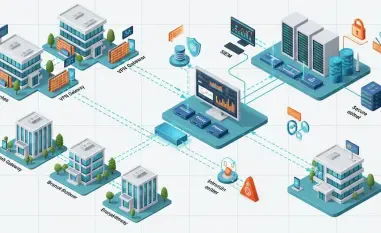
The rapid integration of artificial intelligence into the American financial system has created a technological arms race where the prize is efficiency and innovation, but the cost of failure could be systemic instability. As algorithms now manage everything from stock trades to fraud detection, the sector finds itself at a critical juncture, grappling with a new generation of cyber threats that are as intelligent and adaptive as the systems they target. This evolution demands a fundamental reassessment of security protocols and regulatory oversight to ensure the resilience of the nation’s economic backbone.
The New Frontier AI’s Deepening Integration into American Finance
Redefining Operations: How AI is Transforming Banks and Financial Firms
Artificial intelligence is no longer a futuristic concept but a present-day operational reality within the U.S. financial sector. Institutions are deploying sophisticated AI tools to automate complex processes, from algorithmic trading that executes transactions in microseconds to predictive risk modeling that forecasts market fluctuations. These systems analyze vast datasets to identify patterns invisible to human analysts, enhancing decision-making and creating significant competitive advantages.
Moreover, the customer-facing side of finance has been thoroughly transformed. AI-powered chatbots now handle routine inquiries, freeing up human agents for more complex issues, while personalized financial advice is generated by algorithms that assess an individual’s spending habits and investment goals. This deep integration is streamlining operations and improving customer experiences, yet it also embeds a new layer of technological dependency at the core of the industry.
The Key Players: From Wall Street Giants to Fintech Disruptors
The adoption of AI is not confined to the industry’s titans. While Wall Street giants have invested billions in developing proprietary AI platforms for high-frequency trading and global risk management, a vibrant ecosystem of fintech startups is leveraging AI to disrupt traditional financial services. These nimble companies are introducing innovative solutions for lending, payments, and wealth management, often forcing larger, more established players to accelerate their own technological transformations.
This widespread adoption creates a diverse and interconnected network of AI systems across the sector. The proliferation of these technologies means that a vulnerability in a small fintech’s platform could potentially create ripple effects that impact larger institutions. Consequently, the challenge of securing AI is a collective responsibility, requiring a sector-wide approach that accounts for players of all sizes.
A System Under Pressure: The Current State of Financial Cybersecurity
The financial industry has long been a primary target for cybercriminals, leading to the development of some of the most sophisticated cybersecurity defenses in the private sector. However, the introduction of AI adds unprecedented complexity to this landscape. Traditional security measures, designed to protect static networks and predictable software, are often ill-equipped to handle the dynamic and opaque nature of advanced machine learning models.
Existing cybersecurity frameworks are now being stretched to their limits. The attack surface has expanded dramatically, with AI models themselves becoming a new vector for exploitation. Malicious actors are no longer just trying to breach perimeters; they are also seeking to poison data inputs, manipulate model outputs, and exploit the inherent “black box” nature of some algorithms to their advantage, challenging the very foundations of financial security.
The AI Revolution: Unpacking Market Momentum and Future Projections
The Double Edged Sword: AI Driven Opportunities and Emerging Threat Vectors
The dual nature of artificial intelligence presents both immense promise and significant peril for the financial sector. On one hand, AI offers powerful defensive capabilities, with machine learning algorithms capable of detecting fraudulent transactions and cyber threats in real time with a speed and accuracy far beyond human capacity. These tools are becoming indispensable for protecting consumer data and institutional assets.
In contrast, these same technologies are being weaponized by adversaries. Malicious actors can use AI to craft highly convincing phishing attacks, generate synthetic identities to bypass security checks, or launch automated attacks that adapt to a system’s defenses. This creates a challenging dynamic where financial institutions must constantly innovate not only to improve their services but also to stay ahead of an equally innovative and AI-powered threat.
Gauging the Impact: Market Growth Adoption Rates and Security Spending Forecasts
The market for AI in finance is experiencing explosive growth, with adoption rates accelerating across all sub-sectors. Projections indicate that investment in AI technologies will continue its upward trajectory, with firms allocating ever-larger portions of their IT budgets to machine learning, natural language processing, and predictive analytics. This momentum is driven by a clear return on investment, as AI demonstrably improves efficiency, reduces costs, and opens up new revenue streams.
This surge in AI adoption is directly fueling a parallel increase in security spending. Financial institutions recognize that their investment in AI is only as secure as the measures protecting it. Forecasts for cybersecurity budgets from 2026 to 2028 show a significant emphasis on AI-specific security solutions, including model validation tools, adversarial attack detection, and enhanced data governance frameworks. This spending reflects a growing understanding that securing AI is not just a compliance issue but a fundamental business imperative.
Navigating the Minefield: The Unique Challenges of AI in a High Stakes Environment
The Black Box Dilemma: Tackling Transparency and Model Manipulation Risks
One of the most significant challenges posed by advanced AI is the “black box” problem, where the decision-making processes of complex models are not easily interpretable by humans. This lack of transparency makes it difficult to audit algorithms for fairness, bias, or, most critically, security vulnerabilities. Without a clear understanding of why a model makes a particular decision, identifying whether it has been subtly manipulated by an attacker becomes nearly impossible.
This opacity creates a fertile ground for adversarial attacks, where malicious actors can introduce carefully crafted inputs to trick a model into making an incorrect decision, such as approving a fraudulent loan or misjudging market risk. Addressing this dilemma requires a move toward more explainable AI (XAI) and the development of robust validation techniques that can ensure model integrity even when their internal workings are not fully transparent.
The Data Dependency: Protecting Vast Quantities of Sensitive Information
AI systems are voracious consumers of data, and their effectiveness is directly proportional to the quality and quantity of the information they are trained on. For the financial sector, this means feeding algorithms with vast troglodytes of sensitive personal and transactional data. While this data is the lifeblood of AI-driven finance, it also represents an enormous liability, concentrating immense risk into a single, high-value target for cybercriminals.
Protecting these massive datasets requires a security posture that goes beyond traditional perimeter defense. It necessitates advanced encryption, strict access controls, and sophisticated data governance policies to ensure that information is protected throughout its lifecycle, from collection and processing to storage. A breach of the data that underpins the industry’s AI models could have catastrophic consequences, eroding consumer trust and undermining the stability of the entire system.
The Vendor Vulnerability: Managing Third Party and Supply Chain Exposures
Few financial institutions develop all their AI capabilities in-house. Most rely on a complex network of third-party vendors for everything from cloud computing infrastructure to specialized machine learning models. While this approach accelerates innovation, it also introduces significant supply chain risks. A security vulnerability in a single vendor’s product could expose dozens of financial firms to a potential breach.
Managing this third-party risk is a critical component of AI security. It requires rigorous due diligence during the procurement process, continuous monitoring of vendors’ security practices, and clear contractual agreements that delineate responsibilities in the event of a security incident. The interconnected nature of the financial ecosystem means that an institution’s security is only as strong as the weakest link in its AI supply chain.
Forging a Framework: The Regulatory Response to an Evolving Threat Landscape
The Treasury’s Initiative: A New Public Private Push for AI Security
In response to the growing challenges, the U.S. Treasury Department has launched a pivotal initiative aimed at establishing a baseline for secure AI adoption across the financial sector. Throughout 2026, the department is releasing a series of resources designed to provide guidance on managing the unique risks associated with artificial intelligence. This effort represents a significant step toward creating a unified approach to AI security.
This public-private push is not about imposing rigid, top-down regulations. Instead, it focuses on collaboration, bringing together industry leaders and regulators to develop a practical framework that can adapt to the rapid pace of technological change. The goal is to promote the confident and responsible use of AI by equipping institutions with the tools and knowledge they need to navigate this new terrain safely.
Beyond Guidance: The Role of Compliance in a Non Mandatory Framework
Although the Treasury’s new resources are being issued as guidance rather than as strict regulatory mandates, they are expected to have a profound impact on industry practices. In a sector where trust and risk management are paramount, financial institutions will face significant pressure to align their operations with these new benchmarks. Adherence will likely become a de facto standard for demonstrating due diligence to regulators, auditors, and customers.
Compliance with this framework will serve as a crucial mechanism for mitigating legal and reputational risk. Firms that can demonstrate they have implemented the Treasury’s recommendations will be in a much stronger position to defend their security posture in the event of an incident. Consequently, while the guidance may be non-mandatory in name, its practical application will be driven by the powerful incentives of the market and the existing regulatory landscape.
A Collaborative Defense: The Artificial Intelligence Executive Oversight Group’s Mission
At the heart of the Treasury’s initiative is the Artificial Intelligence Executive Oversight Group, a coalition of senior executives from financial institutions, federal and state regulators, and key industry stakeholders. This group was formed under the White House AI Action Plan with a clear mission: to address the strategic challenges and opportunities of AI through a collaborative, multi-stakeholder approach.
The group’s work is central to ensuring that the resulting guidance is both effective and practical. By drawing on the diverse expertise of its members, the oversight group is able to craft recommendations that reflect the realities of the market while upholding the principles of security and systemic resilience. This collaborative model is essential for building a defensive framework that is robust enough to protect the financial system yet flexible enough to foster continued innovation.
The Path Forward: Securing the Next Generation of Financial Technology
From Reactive to Proactive: The Shift in AI Security Paradigms
For years, cybersecurity has largely operated on a reactive basis, responding to threats as they emerge. However, the nature of AI-driven threats requires a fundamental paradigm shift toward a proactive and preventative security model. Securing AI is not about patching vulnerabilities after they are discovered but about building security into the entire lifecycle of an AI system, from data collection and model training to deployment and ongoing monitoring.
This “security by design” approach involves embedding security considerations at every stage of development. It means rigorously vetting data for potential poisoning, testing models for adversarial vulnerabilities before they are deployed, and implementing continuous monitoring systems that can detect anomalous behavior in real time. This proactive stance is essential for building AI systems that are resilient by design, not just by patch.
Building Trust: The Future of Digital Identity and Fraud Prevention
Trust is the bedrock of the financial system, and the adoption of AI has raised the stakes for maintaining it. The Treasury’s focus on enhancing digital identity verification and fraud prevention through AI reflects this reality. By leveraging AI to create more secure and reliable methods of verifying identities, financial institutions can build greater confidence among consumers that their data and assets are safe.
The future of fraud prevention lies in AI systems that can not only detect existing fraud patterns but also predict and preempt new types of attacks. As these technologies become more sophisticated, they will play a crucial role in safeguarding the integrity of digital transactions and protecting consumers from increasingly complex threats. Ultimately, the successful and secure deployment of AI will be measured by the level of trust it inspires across the financial ecosystem.
Fostering Innovation Safely: Balancing Progress with Systemic Resilience
The ultimate goal of the current security initiatives is not to stifle technological progress but to create an environment where AI innovation can flourish without introducing unacceptable risks to the financial system. The challenge lies in striking the right balance between encouraging the rapid development of new technologies and ensuring that the foundational resilience of the sector is not compromised.
This balancing act requires a forward-looking approach that anticipates future threats and builds adaptive security frameworks. It also calls for ongoing collaboration between industry innovators and regulators to ensure that security standards evolve in lockstep with technological advancements. By fostering a culture of responsible innovation, the financial sector can harness the full potential of AI while safeguarding its long-term stability and integrity.
A Question of Readiness: A Concluding Assessment and Strategic Imperatives
The Verdict: Assessing the Financial Sector’s Current Preparedness
The U.S. financial sector’s readiness for AI-driven cyber threats was a mixed but improving picture. While larger institutions had made significant strides in developing sophisticated defenses and governance models, a notable gap existed among smaller firms and fintechs, which often lacked the resources for comprehensive AI security. The rapid pace of adoption frequently outstripped the development of corresponding security protocols, leaving pockets of vulnerability across the interconnected system. The Treasury’s initiative marked a critical inflection point, providing a much-needed baseline that began to level the playing field and foster a more unified defensive posture.
Strategic Recommendations: Key Steps for a Secure AI Powered Future
Moving forward, a secure AI-powered future for finance depended on three strategic imperatives. First, the industry needed to transition fully from a compliance-driven mindset to one of proactive threat anticipation, embedding security into the DNA of AI development. Second, a greater emphasis was placed on talent development, creating a new generation of professionals skilled in both finance and AI security. Finally, the collaborative model pioneered by the Artificial Intelligence Executive Oversight Group had to become the permanent standard, ensuring that the dialogue between the private sector and regulators remained continuous and adaptive to the ever-evolving technological landscape. These steps were essential to transforming readiness from a question into a confident assertion.