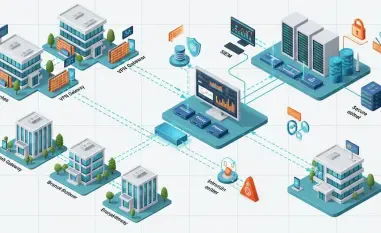
The digital perimeter of modern enterprises often relies on trusted content collaboration platforms, yet hidden architectural weaknesses can turn these secure hubs into gateways for total system compromise. Recent discoveries in the ShareFile ecosystem have brought to light a critical flaw known as CVE-2026-2699, which carries a severity rating of 9.8 on the CVSS scale. This vulnerability is classified as an Execution After Redirect (EAR) bug, a sophisticated error where a server continues to process a request even after an instruction to redirect the user has been issued. By meticulously stripping specific HTTP headers from their requests, external attackers can effectively bypass administrative barriers that were intended to protect the core infrastructure. This unauthorized entry point provides a direct path to sensitive Storage Zone configuration pages, which act as the brain of the file-sharing environment. Once inside, an actor can manipulate passphrase settings or silently redirect the entire file storage mechanism toward an attacker-controlled AWS S3 bucket. Such a redirection would allow for the seamless exfiltration of an organization’s most sensitive data assets without triggering typical perimeter alarms.
Exploiting the Chain: From Configuration Access to Execution
Building on this initial breach of administrative trust, security researchers identified a second, equally dangerous vulnerability tracked as CVE-2026-2701. This flaw involves an arbitrary file upload capability that, while dangerous on its own, becomes catastrophic when chained with the aforementioned configuration bypass. When an attacker successfully leverages the Execution After Redirect bug to gain control over the system’s storage settings, they can reconfigure the application to treat its own internal webroot directory as a valid storage destination. This specific manipulation sets the stage for the deployment of a web shell directly into the folder where the web server executes code. By uploading a malicious script under the guise of a standard file transfer, the adversary achieves full Remote Code Execution on the targeted instance. The gravity of this situation is amplified by the fact that no prior authentication is required to initiate these intrusive actions. This flaw transforms a standard business tool into a remote-controlled asset for malicious actors, demonstrating how legacy administrative endpoints remain a prime target for modern exploitation techniques.
Strategic Remediation: Hardening the Administrative Surface
Maintaining the integrity of file-sharing infrastructure requires immediate architectural adjustments and a rigorous approach to software lifecycle management in 2026 and beyond. In direct response to these findings, ShareFile released version 5.12.4 to effectively close the vulnerabilities that permitted unauthenticated administrative access. Current evaluations indicated that newer iterations of the platform, specifically those within the 6.x release branch, did not contain the vulnerable code paths necessary for these exploits to function. Security teams were advised to audit their existing Storage Zone controllers and verify that legacy configurations were not exposed to the public internet without additional layers of multi-factor authentication. Organizations focused on long-term resilience prioritized the implementation of robust attack surface management tools to identify misconfigured headers before they could be weaponized by external threats. The resolution of this incident served as a stark reminder that even robust enterprise solutions necessitate constant vigilance and a proactive patching strategy. By isolating administrative interfaces from the public-facing web, the potential for lateral movement and large-scale data theft was significantly curtailed.