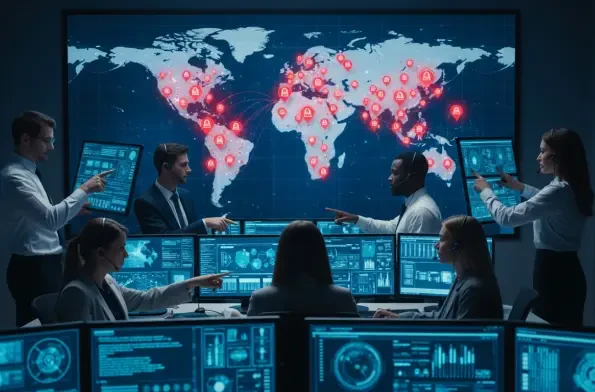
In a development that sent shockwaves through the global cybersecurity community, a catastrophic vulnerability in a core component of the React open-source library has been weaponized with unprecedented speed, triggering a wave of attacks reminiscent of the industry-defining Log4Shell incident. This critical flaw, now tracked as React2Shell, represents an immediate and severe threat to countless web applications, forcing a rapid and coordinated response from defenders worldwide.
The Anatomy of a Crisis Unpacking the React2Shell Vulnerability
At the heart of the ongoing crisis is CVE-2025-55182, a remote code execution (RCE) vulnerability within React Server Components that has been assigned a perfect 10.0 Common Vulnerability Scoring System (CVSS) score, signifying maximum severity. This perfect score is reserved for flaws that are easy to exploit remotely, require no user interaction, and can lead to a complete system compromise. The name “React2Shell” was quickly adopted, drawing an immediate and chilling parallel to the 2021 Log4Shell incident, which exposed a similar foundational flaw in a ubiquitous Java library and caused years of security fallout.
The gravity of CVE-2025-55182 cannot be overstated, as its discovery was almost instantly followed by real-world exploitation from a range of sophisticated threat actors. Unlike vulnerabilities that remain theoretical for weeks or months, React2Shell was turned into an active weapon within hours of its public disclosure, leaving defenders with a dangerously narrow window to react. This article provides a comprehensive analysis of the flaw’s rapid weaponization, identifies the specific technologies most at risk, and outlines the non-negotiable remediation strategies required to contain this pervasive threat.
From Disclosure to Domination The Escalating Global Impact
The Initial Onslaught How Threat Actors Turned Theory into Global Attacks in Hours
The timeline from public disclosure to widespread exploitation was alarmingly short, demonstrating the hyper-aggressive posture of modern adversaries. Security researchers observed active scanning for vulnerable systems within hours of the flaw’s details being released. Both state-affiliated groups, including several with ties to China as reported by Amazon’s security leadership, and opportunistic cybercriminals began weaponizing the flaw almost simultaneously. This immediate action underscores a new reality where the gap between vulnerability announcement and active attack has all but vanished.
Leading cybersecurity firms have documented a swift and dangerous evolution in attacker behavior. Initial reconnaissance scans quickly escalated into invasive “hands-on-keyboard” attacks targeting compromised cloud-native environments. Attackers were observed deploying cryptomining malware to steal computing resources, exfiltrating sensitive credentials, and establishing persistent backdoors for long-term access. This rapid progression from discovery to deep intrusion highlights the immense pressure on defense teams, sparking a critical debate about responsible disclosure timelines in an era where adversaries can operationalize new exploits at machine speed.
The Default Danger Pinpointing the Vulnerability Within Next.js and Server-Side Rendering
The popular Next.js framework, maintained by Vercel, quickly emerged as the primary vector for React2Shell attacks. While the core vulnerability lies within the React Server Components (RSC) protocol, its implementation in Next.js made applications built with the framework an immediate and accessible target. The situation was so severe that a separate, albeit later rejected, CVE was briefly assigned to highlight the direct impact on the framework, signaling the exceptional risk it faced.
Research from security firm VulnCheck confirmed the worst fears of many development teams: Next.js applications running affected versions were vulnerable by default. The flawed deserialization logic within the RSC protocol was found to be reachable without any special server configurations or user-defined actions. This inherent exposure is a direct result of the framework’s reliance on Server-Side Rendering (SSR), a popular architecture that unfortunately exposes the vulnerable component to attackers. This default vulnerability created a stark contrast between the ease of development offered by Next.js and the severe, newly discovered security liabilities baked into its core architecture.
The Ripple Effect Identifying Other Vulnerable Frameworks and the Global Footprint
While Next.js has been the focal point of initial attacks, security experts from Wiz caution that the threat is not contained to a single framework. The vulnerability is systemic to the underlying React Server Components protocol, meaning any technology that utilizes it is potentially at risk. Internal research has already produced successful proof-of-concept exploits against other frameworks, including Waku and Vite, with only minor modifications. This finding suggests that attackers will likely broaden their scope as they refine their tools, expanding the campaign beyond the most obvious targets.
The potential attack surface is immense, painting a picture of a truly global security event. Internet intelligence platform Censys identified over 2.1 million publicly exposed web services running technologies based on React Server Components. While not all of these instances are confirmed to be vulnerable, the sheer volume represents a massive pool of potential targets for attackers. Geographically, the United States leads the count of exposed services, followed by China and Germany, demonstrating the worldwide distribution of the risk and challenging any assumption that the threat is localized.
The Mitigation Imperative Evaluating Patches Firewalls and the Limits of Perimeter Defense
In the face of active and widespread exploitation, the foremost defensive measure is to patch all affected software. This remains the only definitive method to close the vulnerability and secure systems. Organizations are strongly advised by security leaders to operate under the assumption that any unpatched, internet-facing server running the vulnerable code has already been compromised. It is important to note that applications running purely on the client-side without a server component are not affected by this specific flaw.
As a supplemental layer of defense, major Web Application Firewall (WAF) providers like Cloudflare and AWS have deployed rules to detect and block known exploit patterns for React2Shell. However, security experts universally warn against relying on WAFs as a primary solution. Publicly available proof-of-concept exploits have already demonstrated techniques to bypass these firewall rules, reinforcing the consensus that perimeter defenses are not a substitute for updating the underlying vulnerable code. Moreover, patching at an enterprise scale presents significant operational challenges, including discovering all vulnerable assets and managing complex software dependencies, which can delay remediation and prolong exposure.
Navigating the Fallout Actionable Strategies for Developers and Security Teams
The critical takeaways from the React2Shell incident are clear and urgent. This is a top-tier vulnerability being actively and aggressively exploited in the wild. Applications built with the Next.js framework represent the most immediate and widespread risk, but the threat extends across the React Server Components ecosystem. Crucially, perimeter defenses like WAFs are proving insufficient on their own and cannot be treated as a substitute for patching.
To navigate this high-stakes environment, organizations must adopt a set of uncompromising best practices. The absolute priority is to patch all affected software and dependencies without delay. Teams should assume that any unpatched server is already compromised and initiate incident response procedures, including hunting for indicators of compromise and rotating credentials. This proactive, “assume breach” mindset is essential for mitigating the potential damage from an intrusion that may have already occurred.
Beyond immediate remediation, this incident serves as a powerful catalyst for strengthening long-term security posture. Organizations should implement robust and continuous vulnerability scanning to identify at-risk assets before they can be exploited. Furthermore, a thorough review of software supply chains is necessary to understand dependencies and associated risks. Embracing security-as-code principles can help automate security controls and embed them directly into the development lifecycle, preventing similar architectural flaws from being introduced in the future.
The Lingering Shadow of React2Shell Redefining Security in a Post-Exploit World
React2Shell represents more than just another critical vulnerability; it marks a fundamental shift in the threat landscape for modern web applications. Much like Log4Shell reset expectations for securing Java-based systems, React2Shell exposes a deep-seated risk within the rapidly expanding JavaScript ecosystem. The incident serves as a stark reminder that even the most popular and trusted open-source components can harbor catastrophic flaws that can be exploited on a global scale.
The immediate crisis will eventually subside as systems are patched, but the importance of ongoing vigilance cannot be overstated. Attackers will continue to innovate, developing new techniques to bypass defenses and exploit the long tail of unpatched systems that will inevitably remain online. The sheer number of potentially vulnerable services ensures that React2Shell will have a lasting impact, with related breaches likely to surface for months or even years to come.
Ultimately, the lingering shadow of React2Shell demands a strategic evolution in how the industry approaches security. A culture of reactive incident response is no longer sufficient. The path forward requires a commitment to proactive security, where resilience is built into application architecture from the ground up. Fostering a community built on shared threat intelligence and collective defense will be paramount to building a more secure and resilient digital infrastructure capable of withstanding the next inevitable crisis.