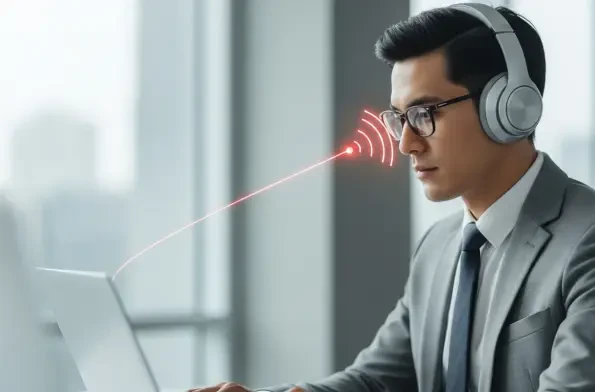
The ubiquitous wireless headphones resting on your desk or tucked into your ears are no longer simple audio accessories; they have evolved into sophisticated, always-on computing devices with persistent, trusted access to the smartphone in your pocket. Security researchers have long warned that the greatest threats in the expanding Internet of Things (IoT) landscape would come not from primary devices like phones, but from the vast ecosystem of secondary peripherals permanently paired to them. A recently disclosed set of critical vulnerabilities brings this theoretical risk into sharp, practical focus, demonstrating how the very headphones trusted to stream music and handle calls could become a covert gateway for malicious actors. This issue is not confined to obscure, low-cost gadgets; it affects some of the most popular and well-regarded products from industry giants, fundamentally changing the way users must think about the security of their personal audio equipment. The convenience of wireless connectivity has introduced a new and often overlooked attack surface, turning a trusted accessory into a potential weak link in your personal digital security chain.
1. Understanding the Gateway Through Your Audio Gear
The core of the problem lies within the Bluetooth System-on-Chips (SoCs) manufactured by Airoha Technology, a major silicon supplier whose components are embedded in an extensive range of headphones and earbuds from leading brands such as Sony, Bose, JBL, Marshall, and Jabra. These chips are far more than simple transceivers for maintaining a Bluetooth connection. They function as the brain of the audio device, running the complex software that governs pairing protocols, manages advanced audio processing like active noise cancellation, controls microphones for voice calls and digital assistants, and critically, maintains the trusted digital handshake between the headset and its host smartphone. In essence, the chip inside your headphones dictates what the device can hear, what data it can transmit, and which devices it implicitly trusts. When fundamental security flaws are discovered at this foundational hardware level, attackers no longer need to find a way to breach the robust defenses of a modern smartphone directly. Instead, they can exploit the headphones as an unsecured side door, leveraging their trusted status to listen in on conversations or interact with the connected phone, all without the user’s knowledge.
The vulnerability transforms the headphones from a passive audio output device into an active, exploitable endpoint. Because the SoC handles microphone input for calls and voice commands, a compromise could allow an attacker to eavesdrop on private conversations or ambient audio in the user’s vicinity. Furthermore, by subverting the trusted connection, a hacker could potentially impersonate the headphones to send commands to the paired smartphone’s voice assistant, initiating calls, sending messages, or accessing sensitive information without any physical interaction from the user. This elevates the threat from a simple privacy breach to a potential vector for direct device manipulation. The user, believing their phone is securely locked in their pocket, would be unaware that the accessory on their head has been turned against them. This scenario underscores a paradigm shift in cybersecurity: the attack surface now extends to every connected device, and the security of the entire personal ecosystem is only as strong as its weakest, and often most overlooked, link.
2. The Mechanics of a Remote Headphone Attack
The exploit, uncovered by researchers at the European cybersecurity consultancy ERNW, centers on a serious design flaw involving an internal protocol named RACE, which stands for Remote Access Control Engine. This protocol was developed by Airoha Technology not for consumer use, but as a powerful diagnostic and servicing tool for manufacturers. Its intended purpose was to facilitate firmware updates, run diagnostics, and perform low-level configuration changes during the production and repair process. However, the ERNW research team discovered that on a wide array of devices, the RACE protocol was not properly secured and remained accessible over multiple interfaces, including Bluetooth Low Energy, Bluetooth Classic, and even direct USB connections, without requiring any authentication. In practical terms, this oversight means that the same powerful, low-level control tools used by engineers to build and fix headphones could be accessed wirelessly by anyone within Bluetooth range. Once an attacker gains access to the RACE protocol, they can read from and write to the device’s memory, including both its flash storage and its active RAM, effectively gaining complete control over the headphone’s operations.
This level of access has profound security implications that extend far beyond a theoretical bug. In their technical disclosure, ERNW researchers Dennis Heinze and Frieder Steinmetz detailed how this unauthorized access could be leveraged for malicious purposes. They demonstrated that an attacker could intercept and read media data, capture microphone recordings in real-time to eavesdrop on conversations, and even impersonate the headphones to issue commands directly to a paired smartphone. The minimal requirement for launching such an attack makes it particularly concerning. As Heinze stated, “Any vulnerable device can be compromised if the attacker is in Bluetooth range. That is the only precondition.” This combination of easy access and powerful control capabilities pushes these vulnerabilities out of the realm of academic interest and into the territory of tangible, real-world risk. The discovery serves as a stark reminder that even seemingly benign accessories now possess the complexity and, consequently, the potential vulnerabilities of full-fledged networked computers.
3. A Widespread Issue Affecting Mainstream Products
This security vulnerability is not an isolated incident limited to obscure or budget-tier products; it impacts a significant number of widely owned, mainstream devices from some of the biggest names in the audio industry. Among the most notable verified vulnerable products are multiple models from Sony’s acclaimed WH and WF series, including the exceptionally popular WH-1000XM5 and WF-1000XM5. These two models represent the pinnacle of consumer-grade noise-canceling headphones and earbuds, respectively, and are among the best-selling audio products on the market. Also on the list are the Bose QuietComfort Earbuds, a staple for business travelers and audio enthusiasts, and the JBL Live Buds 3, which are sold in high volumes through major online and brick-and-mortar retailers. The inclusion of these flagship products demonstrates that even premium price points and reputable brand names do not guarantee immunity from underlying component-level security flaws. The issue’s scope extends to lifestyle and fashion-focused brands as well.
The list of affected devices continues with several models from Marshall, including the MAJOR V headphones and MINOR IV earbuds, which are popular for their distinctive design. Additional products from specialized audio companies like Beyerdynamic and Teufel, as well as mainstream communication device maker Jabra, are also confirmed to be vulnerable. This broad distribution means that millions of consumers are likely using affected products without being aware of the potential risk. As of late 2025, a partial list of impacted devices was released, but researchers cautioned that the full extent of the issue remains unsettled. “Due to the sheer amount of devices that are potentially still affected, there is no proper overview over the current status of fixes,” Heinze warned. This uncertainty places a significant burden on consumers to proactively check with manufacturers for security updates, a task complicated by the fact that many users may not even know that their headphones are capable of receiving firmware patches.
4. Navigating the Patching Process and Manufacturer Responses
In response to the vulnerability disclosure, Airoha Technology developed and released an updated software development kit to its hardware partners in June 2025, providing the necessary code to mitigate the identified security flaws, cataloged as CVE-2025-20700, CVE-2025-20701, and CVE-2025-20702. However, the chipmaker does not control the final firmware that is deployed on consumer devices. The responsibility for implementing these patches, testing them, and distributing them to end-users falls squarely on the individual device manufacturers like Sony, Bose, and JBL. This multi-stage process has resulted in an uneven and somewhat confusing rollout of fixes, leaving many consumers in a state of uncertainty. While some brands have acted swiftly to protect their customers, others have been slower to respond or have not provided clear documentation about whether their updates address these specific vulnerabilities, creating a fragmented security landscape for users of affected products.
Some manufacturers have been forthcoming with their remediation efforts. JBL, for instance, confirmed that it released over-the-air (OTA) firmware updates for its two impacted products, the Live Buds 3 and Endurance Race 2, in July 2025. These updates are available to customers through the official JBL Headphones app. Similarly, Bose stated that the vulnerability was limited to its QuietComfort Earbuds and that a security fix was included in version 1.2.1 of the Bose QCE app, which was released in September 2025. Products from Beyerdynamic, Jabra, and Marshall are also known to have received the necessary patches. However, the status for many other devices remains less clear. As researcher Dennis Heinze confirmed, for some products, “An update might not be available, or the vendor might not have released information about whether the vulnerabilities were addressed in an update.” This situation highlights a critical challenge in the IoT ecosystem: securing devices depends on a long chain of stakeholders, and a breakdown at any point can leave consumers exposed.
5. Taking Action to Secure Your Personal Audio Devices
For consumers, the most critical and immediate step is to ensure that their wireless headphones or earbuds are running the latest available firmware. Most modern audio devices from major brands support over-the-air updates through a companion smartphone application. Users of any of the potentially affected devices should open the corresponding manufacturer’s app (such as the Sony Headphones Connect app, the Bose Music app, or the JBL Headphones app) and check for any pending software or firmware updates. If an update is available, it should be installed without delay. This single action is the most effective defense against the exploitation of the RACE protocol vulnerability. It is a simple, five-minute process that directly patches the security hole at the device level. Treating these updates with the same urgency as smartphone operating system updates is now essential, as these peripherals are no longer simple accessories but are integral components of one’s personal technology ecosystem with significant security implications.
Beyond installing immediate updates, this incident should prompt users to practice better general security hygiene for their connected devices. A valuable secondary step is to conduct a review of the paired Bluetooth devices listed in one’s smartphone settings. Over time, this list can become cluttered with connections to old headphones, rental car audio systems, and other temporary devices. Each of these pairings represents a trusted relationship that could potentially be exploited if the device itself has a vulnerability. Users should take a few moments to “forget” or remove any devices from this list that they no longer use or recognize. This practice reduces the overall attack surface by minimizing the number of trusted endpoints connected to the phone. While the odds of an average person being actively targeted through their headphones remain low, the risk is no longer zero. Given that the fixes are straightforward and the potential downside involves the compromise of personal conversations and data, proactively securing these devices is a logical and necessary precaution.
A New Perspective on Peripheral Security
The discovery of the vulnerabilities in Airoha-based Bluetooth audio devices served as a crucial turning point in the public understanding of IoT security. It definitively demonstrated that peripherals like headphones were no longer passive accessories but had become complex, networked endpoints with their own exploitable flaws. The incident highlighted the fact that a device’s security was only as strong as its weakest component, and that a vulnerability in a third-party chip could impact dozens of reputable brands simultaneously. The response from manufacturers was a case study in the challenges of securing a fragmented ecosystem; while some issued patches promptly, the overall process revealed a need for greater transparency and speed in delivering critical security updates to consumers. Ultimately, this episode underscored the necessity for users to extend their security consciousness beyond their phones and laptops to every device they connect to them. It was a clear signal that in an increasingly interconnected world, every microphone and every trusted connection required careful management.