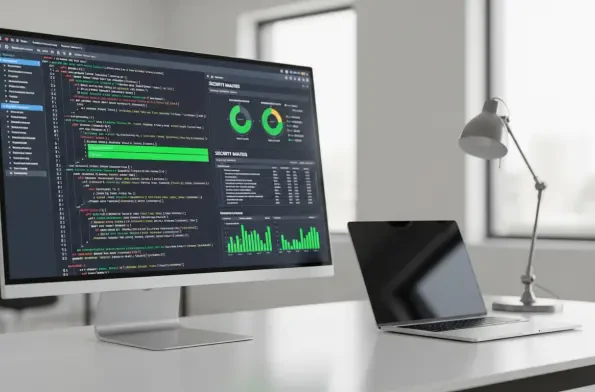
As modern enterprise security teams grapple with the sheer volume of telemetry data and code repositories, the limitations of massive, general-purpose large language models have become increasingly apparent in terms of latency and operational costs. Cisco is addressing these challenges directly by introducing the Antares family of Small Language Models, which includes the Antares-350M and Antares-1B. These models represent a fundamental shift in how artificial intelligence is applied to cybersecurity, moving away from “one-size-fits-all” foundation models toward specialized, highly efficient tools designed specifically for repository-level vulnerability localization. By releasing these models as open-weight resources on the Hugging Face platform, Cisco is fostering a more transparent and collaborative security ecosystem where organizations can audit, adapt, and deploy these models within their own private environments. This strategic move acknowledges that for many organizations, the primary hurdle to AI adoption is no longer just capability, but the practicalities of data sovereignty and the economic sustainability of high-scale processing.
The Economic Reality: Moving Beyond Frontier Models
The financial burden of utilizing frontier models like GPT-4 for exhaustive security scanning has reached a tipping point for many global enterprises in 2026. Analyzing tens of thousands of individual code repositories requires a staggering number of tokens, and when these tokens are processed through external third-party APIs, the resulting monthly invoices can quickly eclipse the budget for an entire security department. This economic friction creates a barrier where deep security analysis is often reserved only for the most critical assets, leaving a significant portion of the software estate vulnerable due to cost constraints. Cisco’s Antares models solve this by providing a high-performance alternative that runs on significantly less hardware, allowing for massive scaling without the proportional increase in cost. By utilizing compact architectures, these models enable continuous, automated scanning across the entire enterprise portfolio, ensuring that no code fragment goes unexamined simply because of budgetary limitations or token usage caps.
Beyond the immediate financial considerations, the issue of data residency and intellectual property protection remains a dominant concern for security practitioners managing sensitive internal codebases. Transmitting proprietary source code to cloud-based AI providers introduces inherent risks regarding data retention policies, potential compliance violations, and the accidental exposure of trade secrets through model training feedback loops. The Antares models mitigate these systemic risks by allowing enterprises to keep their entire analysis pipeline within their own controlled data centers or private clouds. This localized approach ensures that sensitive logic and architectural patterns never leave the organization’s trust boundary, providing the peace of mind necessary for highly regulated industries like finance, healthcare, and defense. By prioritizing data sovereignty, Cisco is enabling a new standard of security where advanced machine learning and strict privacy are no longer mutually exclusive objectives, but rather complementary components of a modern defense strategy.
Technical Precision: The Power of Task-Specific Training
The development of the Antares family underscores a growing realization that massive parameter counts are not a prerequisite for excellence in specialized cybersecurity tasks. Through a process of rigorous optimization and training on highly curated, security-focused datasets, these compact models have demonstrated the ability to outperform much larger generalized engines in the specific domain of identifying vulnerable sections of code. This specialized focus allows the models to ignore the general-purpose “noise” that often distracts larger models, resulting in higher precision and a lower rate of false positives. Traditional static analysis tools often swamp security engineers with irrelevant alerts, but the contextual understanding provided by the Antares models allows for a much more nuanced interpretation of code behavior. This results in a more streamlined workflow where developers and security teams can focus on genuine threats rather than wasting valuable hours triaging erroneous reports generated by less sophisticated scanning tools.
Performance metrics for the Antares-350M and Antares-1B illustrate that these small language models are not only effective but also remarkably efficient when compared to the current industry leaders. In recent head-to-head benchmarks, these models completed complex security localization tasks at a fraction of the computational cost associated with leading open-weight models and were nearly 200 times more cost-effective than top-tier frontier models. This level of efficiency is a game-changer for organizations looking to integrate security checks directly into the continuous integration and continuous deployment pipelines where speed is of the essence. By reducing the inference time from minutes to seconds, Antares enables real-time security assessments that keep pace with the modern development lifecycle, allowing for immediate feedback as code is written. This rapid turnaround cycle helps prevent vulnerabilities from being merged into main branches, significantly lowering the overall cost of remediation by addressing security flaws at their point of origin.
Architectural Strategy: Implementing a Layered Defense
Cisco is championing a sophisticated, layered architecture for enterprise AI where different classes of models are assigned roles based on their specific strengths and operational efficiencies. Within this framework, small, localized models like Antares serve as the first line of defense, handling high-volume, repeatable tasks such as initial triage and the precise localization of potential bugs. This hierarchical approach ensures that the bulk of the heavy lifting and data processing is performed using the most cost-effective and private resources available. Instead of deploying a massive, power-hungry model for every minor code check, organizations can reserve those expensive frontier models for only the most complex reasoning challenges that require deep cross-domain knowledge or high-level architectural analysis. This division of labor optimizes the use of both human and computational resources, ensuring that the most advanced tools are used only where they provide the greatest incremental value.
This strategy effectively serves as a force multiplier for security engineers by automating the most tedious aspects of the vulnerability management process. Rather than spending hours manually navigating through millions of lines of code to verify a single bug report or a potential exploit path, engineers can rely on Antares to provide immediate, pinpoint accuracy on where the issue resides. This drastic reduction in initial triage time allows human experts to dedicate their specialized skills to high-impact activities such as remediation planning, threat modeling, and strategic architecture reviews. By automating the “find” part of the security equation, Cisco is empowering teams to move faster and be more proactive in their defensive postures. The integration of these models into everyday developer tools means that security is no longer a separate, final step in the process, but an omnipresent assistant that helps maintain high standards of code quality from the very first line written.
Future Governance: Securing the Path to Autonomous Remediation
The release of the Antares family marks a significant step toward an increasingly autonomous landscape in software security. In the coming years, from 2026 to 2028, the industry expects a transition where AI agents do not merely detect vulnerabilities but actively participate in the orchestration of remediation workflows and the generation of secure patches. To facilitate this evolution, Cisco is developing comprehensive frameworks such as the Foundry Security Spec and the CodeGuard system, which are designed to provide the necessary guardrails for autonomous agents. These systems ensure that AI-driven actions are governed by strict security policies, preventing the accidental introduction of new bugs during the patching process. As agents become more capable of making changes to production codebases, having a reliable and compact model like Antares to verify every step of the process becomes critical for maintaining the integrity and stability of complex enterprise systems.
Governance and human oversight remained the cornerstones of this transition as organizations integrated more autonomous capabilities into their security operations. Security leaders recognized that while AI can significantly accelerate defense, it also requires rigorous auditing to prevent risks such as prompt injection or unintended logical changes in critical infrastructure. By implementing constraints such as read-only access for initial analysis and strictly defined resource limits, teams successfully balanced the speed of AI-driven tools with the necessity of human accountability. The deployment of the Antares models demonstrated that the most effective path forward involved a combination of specialized local intelligence and a robust framework for ethical and secure AI management. Organizations that adopted these actionable steps found themselves better prepared to handle the evolving threat landscape, using the insights provided by Cisco to build resilient, self-healing software ecosystems that prioritized safety and efficiency in equal measure.