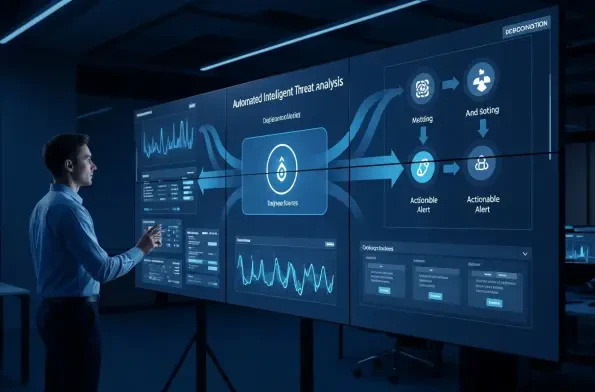
The relentless demand for faster, more secure operational outcomes has pushed Security, IT, and engineering teams to a breaking point, creating a chasm between the promise of technology and the day-to-day reality of manual toil. While a significant majority of employees look to artificial intelligence as a way to escape repetitive tasks and focus on higher-value work, the prevailing industry consensus reveals a starkly different picture: an overwhelming number of AI initiatives fail to ever make it into a production environment. This gap highlights a fundamental misunderstanding of how to achieve tangible results. Leading practitioners and analysts now converge on a single, powerful concept as the solution: the development of intelligent workflows that act as the connective tissue between disparate tools and genuine business impact. This roundup explores expert insights and proven strategies that demonstrate how to move beyond isolated automation and build a cohesive program that truly solves operational bottlenecks.
The Widening Gap Between Automation’s Promise and Operational Reality
Across the technology landscape, operational teams face mounting pressure to accelerate business outcomes amidst an environment of ever-growing complexity. The core challenge, as identified by numerous industry reports, is a critical paradox. While approximately 70% of employees express eagerness to adopt AI to offload tedious work, a staggering 88% of AI projects stall in the pilot phase, never delivering their intended value. This high failure rate points not to a flaw in the technology itself but to a flawed implementation strategy focused on acquiring tools rather than solving problems.
The emerging consensus among industry leaders is that true progress requires a strategic shift away from standalone automation tools and toward integrated, intelligent systems. The concept of an “intelligent workflow” has gained significant traction as the most effective bridge between disconnected technologies and measurable business results. This approach focuses on orchestrating automated actions, AI-driven decisions, and human expertise into a single, seamless process designed to resolve a specific operational pain point, thereby ensuring that technology investments translate directly into enhanced efficiency and security.
From Standalone Tools to a Cohesive Intelligent Workflow Program
From Manual Drudgery to Automated Defense: Neutralizing Phishing Threats in Real-Time
One of the most widely cited examples of operational strain is the manual analysis of phishing threats, a task that consistently consumes an outsized portion of a security team’s capacity. The process of investigating suspicious emails—dissecting headers, vetting URLs, and scanning attachments—is not only time-intensive but also prone to human error, creating dangerous delays in response time. This manual drudgery leaves teams perpetually behind, reacting to threats rather than proactively defending against them.
A best-practice model gaining widespread adoption involves an automated workflow specifically designed to analyze phishing email senders, URLs, and attachments. This approach integrates directly with specialized security services like VirusTotal and URLScan.io, allowing the system to automatically perform deep analysis on multiple threat vectors simultaneously. By consolidating intelligence from these disparate sources into a single, actionable verdict, this workflow transforms a multi-hour investigation into a reliable, minutes-long process, freeing security analysts to focus on strategic threat hunting and incident response.
Liberating Your IT Service Desk: How AI Agents Can Handle the Repetitive Grind
Experts in IT service management consistently point to the overwhelming volume of repetitive requests as a primary source of inefficiency. Tasks such as password resets, software access provisioning, and basic troubleshooting create a constant backlog, preventing skilled IT personnel from addressing more complex, strategic projects. This model of human-led resolution for low-level issues is widely seen as unsustainable in modern, fast-paced organizations.
To address this, leading organizations are implementing workflows that use AI agents to automate IT service requests directly within collaboration platforms like Slack. In this model, an AI agent first categorizes an incoming employee request before routing it to a specialized agent designed to handle that specific task. For example, a password reset request can be fulfilled in seconds through an automated verification and execution process. This approach is transformative, with many reporting a reduction in response times from hours to mere moments while maintaining a crucial human-in-the-loop oversight for escalations or sensitive approvals.
Getting Ahead of the Breach: Proactive Vulnerability Management through Intelligent Automation
The conventional approach to vulnerability management—periodic scanning and manual cross-referencing of assets against threat lists—is increasingly viewed as a dangerously reactive posture. Security strategists emphasize that in the face of continuous disclosures from sources like CISA’s Known Exploited Vulnerabilities catalog, a manual, reactive scramble to identify exposed systems is a losing battle that heightens breach risk.
The forward-thinking solution championed by security experts is an intelligent workflow that connects external threat intelligence directly to internal asset management platforms. A workflow that checks for new CISA vulnerabilities can, for instance, continuously monitor threat feeds and, upon detecting a new entry, automatically query a system like Tenable to see if any internal assets are affected. This real-time connection between external threat data and internal inventory enables security teams to take immediate, targeted action based on confirmed exposure, challenging the outdated assumption that vulnerability management can be relegated to a periodic, scheduled task.
Beyond Isolated Tasks: The Power of a Unified Automation, AI, and Human-in-the-Loop Strategy
The common thread connecting these successful use cases is the synergistic combination of automation, AI-driven analysis, and indispensable human expertise. Thought leaders in operational excellence argue that the high failure rate of technology pilots is often due to a siloed approach where tools are implemented without being woven into a cohesive process. An integrated workflow program, by contrast, delivers sustained impact because it is built on a unifying platform, such as Tines, that harmonizes these different components.
Therefore, the three workflows detailed are not presented as separate, isolated solutions but rather as practical demonstrations of a single, powerful operational philosophy. This philosophy holds that technology’s greatest value is realized when it augments human judgment, not when it attempts to replace it. By building systems that blend automated execution with intelligent decision-making and strategic human oversight, organizations can create resilient, scalable operations.
Your Blueprint for Implementing an Intelligent Workflow Program
The primary takeaway from a review of successful automation initiatives is that tangible results come from solving specific, painful operational bottlenecks, not from acquiring technology for its own sake. The most effective strategies do not begin with a broad, undefined mandate to “implement AI” but with the identification of a high-friction, low-value manual process that is ripe for transformation. This targeted approach ensures that the initial investment in an intelligent workflow delivers immediate, measurable gains.
For organizations seeking a strategic starting point, the consensus recommendation is to implement a pre-built, high-impact workflow. This allows teams to demonstrate value quickly, build organizational momentum, and secure buy-in for a broader program. The next actionable step for any team leader is to identify a candidate process within their own operations—whether it is alert triage, user provisioning, or compliance reporting—and map its current state before designing an intelligent workflow to streamline it.
Amplifying Human Ingenuity, Not Replacing It
The central conclusion drawn from an analysis of modern operational strategies was that intelligent workflows were most effective when designed to augment human expertise. By automating the repetitive and mundane, these systems freed highly skilled professionals to concentrate on the strategic, creative, and complex initiatives that drive true business innovation. The future of efficient and secure operations appeared to depend on building these connected, intelligent systems that could evolve alongside the organization. Ultimately, the most successful organizations were those that shifted their focus from chasing disparate AI tools to building a foundational intelligent workflow program that delivered lasting and compounding value.