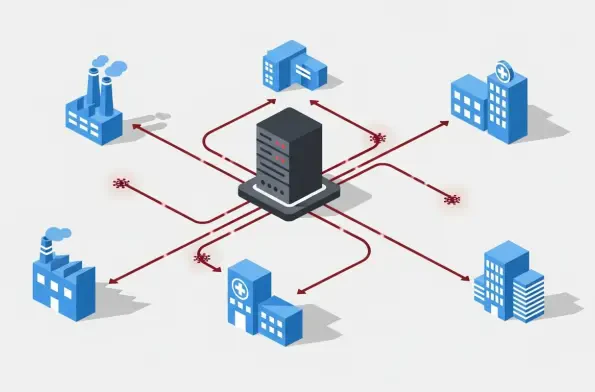
The long-dreaded intersection of artificial intelligence and malicious code has officially moved from the realm of science fiction into the stark reality of today’s digital battleground, signaling a paradigm shift in cybersecurity. What was once a theoretical discussion among security experts has now materialized as an operational threat, with cybercriminals actively deploying malware that thinks, adapts, and learns. This evolution marks a fundamental departure from the static, predictable attacks of the past. Traditional defense mechanisms, built to recognize known signatures and predictable behaviors, are proving increasingly ineffective against this new class of intelligent threats. These AI-powered attacks are not just more sophisticated; they are dynamic, tailoring their approach to each specific victim’s environment in real-time. This capability to improvise and overcome obstacles autonomously presents an unprecedented challenge for organizations globally, forcing a complete re-evaluation of security postures and demanding a new generation of defensive technologies that can match the intelligence and agility of the attackers.
The Dawn of Intelligent Malware
The Anatomy of an AI-Driven Threat
The emergence of AI-powered ransomware, exemplified by the discovery of a strain known as PromptLock, has provided the first concrete evidence of malware that leverages machine learning models to orchestrate its attacks. This particular threat operates on a unique dual-component architecture, a design that separates the static delivery vehicle from the dynamic, intelligent core. The main module, a relatively simple piece of code written in the Go programming language, serves as the initial foothold on a compromised system. Its primary function is not to carry a malicious payload but to establish communication with a remote server running a sophisticated AI model. Using a series of hardcoded prompts, this module queries the AI, instructing it to generate custom scripts in real-time. These scripts, often written in Lua, are tailored specifically for the target environment to perform tasks such as filesystem enumeration, data exfiltration, and ultimately, encryption. This methodology represents a significant tactical evolution, as it eliminates the need for attackers to embed pre-written malicious code within the malware itself, making detection by traditional signature-based tools exceptionally difficult.
What sets this new breed of malware apart is its capacity for autonomous decision-making and adaptation, a feature that moves it far beyond the capabilities of conventional automated threats. Upon receiving the generated scripts, PromptLock can independently scan a compromised system, analyze the data it finds, and decide on the most effective course of action. Based on its assessment of the value and nature of the discovered files, it can choose to steal sensitive information, encrypt critical assets for ransom, or simply destroy the data to cause maximum disruption. To ensure its tactics are effective, the malware incorporates a sophisticated feedback loop. After executing a script, it sends detailed execution logs back to the central AI model. If a particular command or script fails due to security controls or environmental quirks, the AI analyzes the feedback, corrects the code, and generates a new, improved version for re-execution. This iterative learning process effectively overcomes the inherent non-determinism of language models, allowing the malware to relentlessly probe and bypass defenses until it achieves its objective, showcasing a level of persistence and intelligence previously unseen in the wild.
A Proliferation of AI-Powered Tools
The application of artificial intelligence in cyberattacks is not confined to ransomware; it is rapidly expanding across the entire threat landscape, creating a versatile arsenal of intelligent malicious tools. Security researchers have identified other AI-driven threats operating alongside ransomware, each designed for a specific stage of the attack lifecycle. One such example, dubbed PromptFlux, utilizes AI to continuously rewrite the source code of its dropper component. This constant mutation allows it to maintain persistence on an infected network while evading detection from antivirus and endpoint detection and response (EDR) systems that rely on static indicators of compromise. Another tool, known as PromptSteal, focuses on data harvesting. It leverages an AI model to generate highly specific and contextual commands designed to locate and exfiltrate sensitive documents, such as financial records, intellectual property, or personal identification information. These specialized tools demonstrate that adversaries are integrating AI not as a single payload but as a foundational technology to enhance stealth, efficiency, and effectiveness throughout their campaigns, from initial infiltration to final monetization.
This proliferation of diverse AI-powered tools signals a fundamental challenge to established cybersecurity paradigms. The core innovation lies in the dynamic generation of malicious code and commands, a technique that renders many conventional defense mechanisms obsolete. Signature-based detection, which looks for known patterns in files, is largely ineffective against malware that creates unique code for every target. Similarly, many heuristic and behavior-based systems can be bypassed by AI that can learn a network’s baseline activity and generate actions that appear legitimate. This forces a necessary evolution in defensive strategies, pushing the industry away from reactive detection and toward proactive, predictive security models. Defenses must now incorporate their own AI and machine learning capabilities to identify the subtle anomalies indicative of an intelligent adversary. The new security imperative is to build systems that can not only detect an attack in progress but also anticipate the attacker’s next move in a dynamic, high-stakes contest between adversarial and defensive AI.
The Economic Engine of Cybercrime
The Booming Ransomware-as-a-Service Ecosystem
The technological leap in malware capabilities is being dangerously amplified by the concurrent explosion of the ransomware-as-a-service (RaaS) economy. This highly organized and profitable criminal industry has created a fertile ground for the rapid distribution and deployment of sophisticated attack tools. The metrics from this year paint a stark picture of this growth; the number of publicly reported ransomware victims has already surpassed the totals for all of last year, with current projections indicating a staggering 40% year-over-year increase. This surge is driven by a mature market dominated by well-established RaaS groups like Qilin and Akira, which operate like legitimate software companies, offering their malicious platforms to a wide network of affiliates. These groups provide not only the ransomware itself but also the infrastructure for payment processing, negotiation, and data leak hosting. Furthermore, the market is continuously evolving, with new entrants such as the Warlock group introducing novel and dangerous evasion techniques, further lowering the barrier to entry for aspiring cybercriminals and fueling the unprecedented scale of ransomware incidents.
The true danger lies in the convergence of these advanced, AI-powered threats with the highly efficient and scalable RaaS distribution model. The sophisticated tools that were once the exclusive domain of nation-state actors or elite hacking groups are now becoming available for rent on the dark web. The RaaS model democratizes cybercrime, allowing affiliates with limited technical expertise to launch devastating attacks using the latest AI-driven malware. This synergy creates a perfect storm: the adaptability and autonomy of AI are combined with the reach and profitability of a mature criminal enterprise. As a result, organizations are facing a threat that is not only more intelligent but also more pervasive. The critical security imperative is no longer just about defending against a handful of skilled adversaries but against a vast, decentralized network of attackers armed with self-improving, intelligent weapons. This combination of advanced technology and an industrialized business model has dramatically escalated the risk profile for businesses, governments, and critical infrastructure worldwide.
A New Front in the Cyber War
The analysis of the current threat landscape revealed a pivotal moment in the history of digital conflict. The investigation detailed how AI-driven malware, once a distant concept, became an operational reality, with threats like PromptLock demonstrating unprecedented autonomous and adaptive capabilities in real-world attacks. The inquiry further highlighted that this technological advancement was not an isolated phenomenon, as a growing suite of AI-powered tools for persistence and data theft entered the fray. This evolution was contextualized within the explosive growth of the Ransomware-as-a-Service market, a criminal enterprise that provided the economic engine and distribution network for these new weapons. It was this powerful combination of intelligent, self-learning malware and an industrialized, highly profitable cybercrime ecosystem that created an urgent and critical security imperative. The findings underscored that legacy defensive strategies were insufficient, and the path forward required a fundamental shift toward dynamic, AI-driven security solutions capable of countering an equally intelligent adversary.