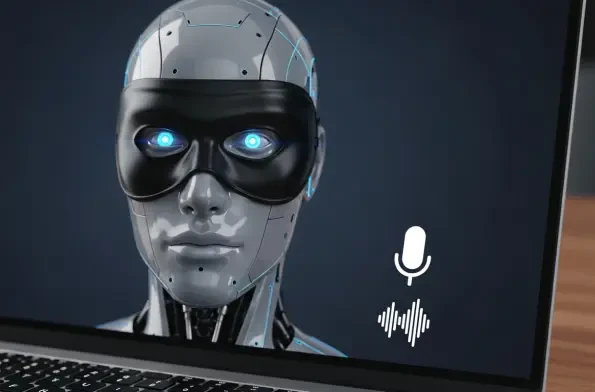
The familiar voice of a trusted colleague on a video call may no longer be what it seems, as a new wave of sophisticated fraud powered by artificial intelligence is rapidly eroding the foundations of digital trust. An analysis of fraud trends throughout 2025 has uncovered an alarming paradigm shift in criminal tactics, revealing that the use of AI in attacks targeting voice and virtual meeting channels has skyrocketed. The data indicates a staggering 1210% increase in AI-enabled fraud incidents, a figure that dramatically overshadows the 195% rise observed in more traditional fraud methodologies during the same period. This exponential growth signals more than just an evolution of existing threats; it represents a fundamental transformation in the fraud landscape. Malicious actors are now armed with tools that are not only more effective but also cheaper, faster, and significantly more scalable, allowing them to launch attacks with unprecedented scope and sophistication, leaving businesses and consumers increasingly vulnerable.
The Mechanics of a New Threat
The rapid adoption of artificial intelligence by malicious actors is fundamentally reshaping the economics and execution of fraud. Criminals are increasingly turning to AI-powered tools like deepfakes and advanced voice bots because they offer a powerful combination of low cost, high speed, and immense scalability, while simultaneously being much more difficult for conventional security systems to detect. This technological shift is enabling a new class of automated, multi-stage attacks, particularly against enterprise contact centers. A common tactic now involves a two-pronged assault. In the initial reconnaissance phase, bots autonomously call an organization’s Interactive Voice Response (IVR) systems. Their goal is to systematically map out the menu structures, test security protocols, and identify the weakest points in the automated defense lines. Once this crucial intelligence is gathered, the bots launch the second phase: a more targeted and sophisticated fraud attempt, often designed to socially engineer live agents into granting unauthorized account access or divulging sensitive information.
This technological arms race is not confined to contact centers; it has moved into the corporate boardroom and executive suites. In these high-stakes environments, fraudsters are deploying hyper-realistic deepfakes of C-suite executives during virtual meetings to deceive unsuspecting employees. The objective of these elaborate schemes is often to trick finance or accounting personnel into authorizing large, fraudulent fund transfers under the guise of an urgent and confidential executive order. The danger of these deepfakes is magnified by their increasing sophistication. Modern iterations can incorporate “baked-in” empathy, mimicking natural conversational cadences and emotional tones with unnerving accuracy. This level of realism effectively weaponizes trust, turning dedicated employees into unwitting accomplices and making them the weakest link in an organization’s security posture. As these AI-driven deceptions become virtually indistinguishable from reality, the very integrity of real-time digital communication is being called into question.
Sector-Specific Vulnerabilities
The healthcare industry has emerged as a particularly attractive target for criminals leveraging these advanced AI-powered tools. Automated bots are being deployed to systematically probe and attack customer accounts within healthcare systems, with a specific focus on gaining access to valuable financial instruments unique to the sector. The primary targets are Health Savings Accounts (HSAs) and Flexible Spending Accounts (FSAs), which can hold significant, easily transferable funds. By successfully breaching these accounts, fraudsters can quickly drain balances, causing direct financial harm to patients. The consequences extend beyond individual financial loss, creating a cascade of security and privacy issues for healthcare providers. A successful breach not only compromises sensitive patient data but also erodes the trust that is foundational to the patient-provider relationship, forcing organizations to invest heavily in enhanced security measures and manage the fallout from data exposure and regulatory scrutiny.
Similarly, the retail sector is grappling with a novel and rapidly growing threat in the form of automated return fraud. This scheme leverages the power of bots to execute thousands of fraudulent refund requests simultaneously. The strategy relies on volume and subtlety; each individual request is for a low-dollar amount, carefully calculated to fall below the monetary threshold that would typically trigger a manual review by a loss prevention specialist. While a single fraudulent return of a few dollars might seem insignificant, the cumulative effect of thousands of such automated requests can result in a material financial loss for the business. This “death by a thousand cuts” approach is incredibly difficult to detect with traditional fraud prevention systems, which are often designed to flag large, anomalous transactions rather than a high volume of seemingly minor ones. The scalability of bot-driven attacks means that retailers face a persistent and costly challenge that directly impacts their bottom line.
Navigating a New Era of Digital Deception
The events of 2025 demonstrated unequivocally that the rise of AI-driven fraud demanded a fundamental rethinking of digital security and trust. The established defense mechanisms, built to counter human-led attacks, proved increasingly inadequate against the speed, scale, and sophistication of automated threats. It became clear that confronting this new reality required more than just incremental updates to existing systems; it necessitated a strategic pivot toward proactive, intelligent defense solutions capable of detecting and neutralizing AI-generated deception in real time. Organizations recognized the urgent need to integrate their own advanced AI and machine learning models into security protocols, creating systems that could analyze voice patterns, conversational dynamics, and other biometric markers to differentiate between authentic human interaction and sophisticated fakes. This period also underscored the critical importance of a multi-layered defense strategy, where technological safeguards were complemented by robust employee education programs designed to foster a healthy skepticism and awareness of the emerging threat landscape.