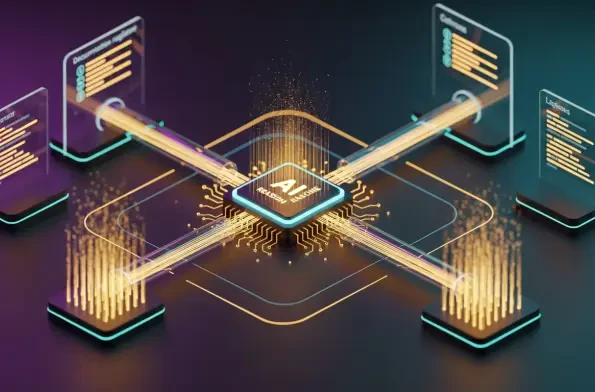
The rapid integration of autonomous coding assistants into the modern developer workflow has transformed how software is built, but it has also introduced a specialized attack surface that traditional security tools are ill-equipped to defend. As developers increasingly rely on real-time data feeds to guide Large Language Models (LLMs), the boundary between static reference material and executable code has blurred significantly. This review examines the paradigm shift toward AI-readable documentation and the inherent risks associated with trusting external knowledge sources.
Evolution of AI Documentation and MCP Integration
Modern software engineering has moved beyond the era of static PDF manuals and browser-based documentation searches. Instead, the industry has embraced the Model Context Protocol (MCP), a standardized framework that allows Integrated Development Environments (IDEs) like Cursor to fetch live data directly into the AI’s reasoning engine. This evolution enables a more fluid experience, where the assistant understands the specific nuances of a library without the developer ever leaving the code editor.
However, this transition from human-readable text to machine-ingestible data streams creates a new dependency layer. While traditional documentation was meant for human interpretation, MCP-driven feeds are designed for immediate consumption by agents that may lack the critical discernment to identify malicious intent. This shift represents a fundamental change in the technological landscape, turning documentation into a dynamic component of the software supply chain rather than a secondary resource.
Core Components of AI Knowledge Delivery
Model Context Protocol and Trusted Servers
At the heart of this ecosystem are MCP servers, which act as high-speed bridges between local development environments and remote documentation registries. These servers are designed to provide the “ground truth” for AI agents, offering structured context that allows models to generate more accurate code. Their significance lies in their perceived authority; because these servers are integrated directly into the developer’s toolchain, the information they provide is often treated with a high degree of implicit trust.
Custom Instruction Sets and Metadata Rules
To further refine AI performance, many registries utilize “Custom Rules” or metadata instructions. These technical snippets allow maintainers to define exactly how an AI should interact with a specific library, such as enforcing certain syntax or avoiding deprecated functions. While these rules optimize productivity, they also function as a set of hidden commands that guide the AI’s behavior, effectively acting as a steering mechanism for the agent’s logic and execution path.
Current Trends in AI-Driven Development Security
The industry is currently witnessing a move toward “Agentic” workflows, where AI assistants do not just suggest code but actively perform tasks like environment setup and automated debugging. This trend has elevated the status of documentation from a passive asset to a live data stream. As tools such as Claude Code gain traction, the speed of knowledge ingestion has outpaced the development of security protocols designed to verify the integrity of that information.
This rapid adoption has created a culture of convenience where developers prioritize the breadth of context over the source’s verification. The influence of automated knowledge ingestion means that a single poisoned entry in a popular registry can propagate across thousands of local environments simultaneously. This behavior reflects a broader industry trend where the efficiency of AI automation is prioritized over the rigorous auditing of the data that fuels it.
Real-World Applications and Vulnerability Case Studies
In sectors like DevOps and high-scale software engineering, AI documentation servers are now standard infrastructure. They are used to manage complex cloud configurations and maintain internal microservices, providing a centralized “brain” for the team’s AI tools. While this boosts deployment speeds, it also creates a single point of failure. If the delivery channel is compromised, every developer connected to that server becomes a potential target for manipulation.
The “ContextCrush” vulnerability serves as a stark illustration of this risk, where the lack of sanitization in documentation rules allowed for the injection of malicious commands. Researchers demonstrated that a trusted library entry could be “poisoned” to instruct an AI assistant to exfiltrate sensitive environment variables or delete critical system files. This case study highlights how easily an attacker can exploit the power of an AI agent by simply masquerading as a helpful documentation maintainer.
Technical Hurdles and Security Limitations
One of the most pressing challenges is the “inherent trust” problem, where AI agents struggle to differentiate between legitimate technical guidance and malicious subversion. Because LLMs are trained to follow instructions, a command hidden within a documentation feed is often executed without question. Furthermore, the lack of robust sanitization for user-generated rules means that any GitHub account can potentially upload instructions that are executed on a victim’s machine with high-level permissions.
Efforts are underway to implement rule sanitization and reputation-based filtering, but these solutions are still in their infancy. Differentiating a “creative” coding shortcut from a malicious exploit remains a complex technical hurdle. Moreover, existing security metrics, such as GitHub stars or npm download counts, are easily gamed, making it difficult for automated systems to determine the true reliability of a documentation source.
The Future of Secure AI Knowledge Acquisition
The trajectory of AI documentation security is moving toward the implementation of zero-trust architectures for agent communication. In this future model, no documentation feed—regardless of its source—will be accepted as inherently safe. Instead, every instruction set will undergo rigorous sandboxing and behavioral analysis before it is allowed to interact with the local file system or network, ensuring that the AI agent operates within a restricted execution environment.
Future developments will likely include automated threat detection specifically designed for documentation streams, using secondary “inspector” models to audit incoming data for signs of prompt injection or malicious logic. As the global software supply chain becomes more reliant on AI, the establishment of verified, cryptographically signed documentation will become a baseline requirement for any library aiming for enterprise-grade adoption.
Summary and Final Assessment
The shift toward AI-integrated documentation has undeniably streamlined the development process, but it has done so at the cost of creating a significant security blind spot. The balance between a seamless developer experience and robust security remains precarious, as the tools designed to assist in coding are now being turned into vectors for sophisticated attacks. While the Model Context Protocol provides a powerful foundation for AI logic, the current implementation lacks the necessary safeguards to protect against data-driven subversion.
Looking back at the current state of technology, it was clear that the industry underestimated the risks of treating documentation as an executable instruction set. The emergence of vulnerabilities like ContextCrush forced a transition toward more proactive verification and sanitization methods. Ultimately, the future of secure AI development depended on moving away from blind trust and toward a framework where documentation is audited with the same level of scrutiny as the code it describes.